Learn 1st Hand About Vonnage, Packet8, And Skype – The Real 411

voip phone services
Whether you’re a current user of Vonnage, Packet8, or Skype VoIP phone services….or are just curious about them….a good place to learn whatever you want to know is their online discussion Forums. Keep in mind that each of these is company sponsored or influenced….so you’ll have to filter through some obvious biases and emotional attachments to get at what you really want.

If your looking for advice or information on set-up, trouble shooting, special promotions, company news, plan pricing, etc…..from actual users and company types…these are good resources. If you don’t mind wading through the frequent sappy gushings of infatuated fans…you can get some very useful pearls. Occassionally you’ll even hit on some eye opening honest assessments and advice too. Just look hard until you find something that fits your need. It’s there.

Vonnage Forum

It’s no secret that I’m not fond of Vonnage. I feel they’re way over priced, have built there reputation on a massive marketing machine vice a quality product, and their customer service sucks. But this is a pretty loyal and active Forum with a few very helpful regular posters. Better to get the scoop here than listen to that annoying “Whoohoo” jingle again.

Packet8 Forum [community.packet8.net/]

It’s also no secret that Packet8 is my favorite broadband phone service. Particularly for any business applications. Their frequent industry awards for business packages…such as the recent top nod for their Virtual Office IP PBX offering….sold me a long time ago. Their Forum takes an extra step to get into for registration but is worth it. The Forum contents are probably more informative overall about services, applications, and the parent company [8X8 Inc.] than the other 2 forums are.

Skype Forum

I’ve never been an advocate of Sofphone services but it does have it’s place. Skype is the hands down king here…but is far from perfect. Their “free” isn’t really free for example….unless those you’re calling also have Skype. Plus their business applications leave much to be desired. But their following are rabid supporters. Plus they have probably the largest share of the VoIP “phone” market worldwide…..especially in Europe and Asia….for now. Their Forum can be more Rah Rah than informational at times but is well worth looking over.

Now if you prefer a more open and unbiased community dialogue and Forum experience….I suggest you trek over to the VoIP Forum at DSLReports.com. It can be somewhat of a free-for-all at times. But there’s a ton of useful information shared on all kinds of VoIP providers beyond just the 3 mentioned above….as well as some links to useful tools to enhance your VoIP experience.

DSLReports.com VoIP Forum

There ya go. Between these open discussion resources you should be able to find whatever you need about VoIP phones … and the specific providers cited. Just keep in mind that it’s all other people’s opinions. The bottom line is that it’s YOUR opinion that counts most.

Chinese Telecommunication Regulations to Trample VoIP

Telecommunication Regulations to Trample VoIP
The Chinese government is starting to set telecommunication regulations and rules and they should not be too surprising because they are very much interested in controlling what goes on inside their nation and also what leaves. China is very much concerned with losing control of the people or having a civil war. Remember it is still a communist nation. We know that the Chinese government is very adamant about Internet censorship for various reasons.

China also sees a threat with Voice IP technologies and that is voice over the Internet like Vonage. China is very concerned about this and they should not surprise anyone because they are very concerned with Internet censorship and maintaining complete control of everything that is viewed online by their people. This does pose a problem for those in the Voice IP business and it may exclude China as a market.

Although the Chinese telecommunication rules and regulations have not been put into place yet they will include VoIP and other light technologies to help the Chinese government maintain control over the people and their communication systems. Some decry the new telecommunication rules and regulations, but few are surprised by them. Perhaps you might consider all this in 2006.

Five Considerations That Ensure Successful Transition to Internet Phone Service

internet phone service
1.Assess your existing infrastructure

One of the most important considerations while planning a migration to an Internet phone service is to assess the state of the existing infrastructure present in the organization. This would require complete analysis of the existing telephone network as well as the data communication network. It is important to clearly determine the infrastructure that can be reused in the new setup, the equipment that would get obsolete and the new equipment that needs to be purchased for the migration. This would give you an idea of the extent of investments needed for the initiative.

2.Evaluate the amount of bandwidth available in the existing network

Before planning a transition to the Internet phone service, it is important to check the corporate LAN to determine if it has enough bandwidth that can support voice traffic. It must have enough capacity to handle this new voice traffic without affecting call quality, losing calls or slowing the Internet traffic. To find out the unused bandwidth on the network, you need to assess it at times of greatest load. This would help you determine any additional bandwidth that you may need and the cost associated with it.

3.Determine the backup power requirements

In contrast to the traditional telephone lines, an IP network would need power backup to ensure uninterrupted service and to keep voice reliability high. It would be important to keep IP phones functioning during power failures and this would call for uninterrupted power supply. This would be an additional cost for the organization that has to be considered during planning.

4.Ascertain if the in-house IT staff can deploy and manage the new system

Another important consideration is to ascertain if the in-house IT staff can deploy and manage the new system. For this you will need to consider your staff’s level of network knowledge and availability to handle this new initiative. If they are not able to handle it, you may need to consider a service provider to do the same for you. Depending upon your requirements, you can then choose between getting the Internet phone service installed onsite and subscribing for a service hosted by a provider.

5.Ensure that the timing for transition is correct

To ensure that any new organization-wide initiative results in the planned return on investment, it is important that the timing of the initiative needs is correct. You need to consider factors like, is your current phone system getting obsolete, are you moving to a new office building where no wiring is installed currently, are you expanding geographically and opening up new offices in far off locations/countries or is your current PBX lease is about to expire, etc. All these considerations would help you time the transition and ensure that implementation is easier and more cost-effective.

For all the work that goes into planning a switch to an Internet phone service, organizations have gained several operational benefits that translate into savings and increased employee productivity. Therefore the bottom line is to plan and time the conversion properly.


Visit: Concepts of Programming Languages (9th Edition) by Sebesta

How to Never Pay a Hotel Phone Bill Again

How to Never Pay a Hotel Phone Bill Again
The protocol is increasingly being adopted as the standard means by which computers communicate to facilitate VoIP or Voice Over Internet Protocol. So you can imagine SIP as a common language for new generation operators to speak to connect calls. However, there are no operators there is only your computer (or other hardware) and that of the person you are speaking with. That brings this introduction to some of the many benefits of SIP communication.

The goal of SIP was to provide users with many of the functions and features they typically expect with making phone calls, such as familiar rings, hearing the ring back tone when a call is placed, and the process of dialing a number. SIP goes beyond this however, also implementing a number of advanced features. Despite its’ convenient interface that mirrors that of a typical telephone call, SIP is based on an internet protocol rather than that of the telephone industry. Because of this, SIP is able to work seamlessly alongside other internet based protocols. This has allowed the technology to uniquely establish a user location, meaning that you can tell the IP address or “location” from which a person is making a call, something vital for offering emergency services. It also allows for coordination amongst the various participants in deciding upon what call features will be supported, as well as providing the protocol for call management which allows for adding, dropping, or transferring call participants.

One of the most exceptional benefits of Session Initiation Protocol (SIP) is its application with Private Branch Exchange (PBX). A private branch exchange is a private telephone network used within an enterprise in which users share a certain number of outside lines for external telephone calls. This provides a significant cost savings to the company because it allows companies to quickly and easily make calls within their institution, as well as save by limiting the number of external phone lines that must be maintained. SIP can extend these cost savings dramatically by offering users free long distance calls worldwide. Once again, because SIP is internet based rather than running over traditional telephone lines, the cost of call transmission are as cheap as say sending an e-mail, that is to say, Free! While PBX is already an efficient use of office resources incorporating SIP into a PBX means taking such savings and capabilities to a new level. Incorporating SIP gives users’ access to free interoffice communications, long distance calls, as well as huge savings in setup and transaction costs. These transaction cost savings are due to the fact that SIP is based on internet protocol allowing for the ability to physically move phones without any need for rewiring or new setup costs. Because that the system is peer-to-peer rather than cog and wheel like hardwired telephony means that there is no complicated setup necessary, but rather users can simply plug the phone into any available broadband connection and without the need for any complicated hardware or software, calls are ready to be made and received.


Visit: Computer Organization and Architecture (8th Edition) Stallings

The Aim To Standardize VoIP Protocols


Voice over Internet protocol (VOIP) is a remarkable technology that lets us talk to one another from our home computers. It provides an efficient and flexible way for us to communicate at work and at home, and the cost savings versus conventional telephone services are incredible. It requires little upfront investment, and you have the ability to travel with your phone number all over the world. It is a technology that almost seems too good to be true. As with any relatively new technology, though, there are technical kinks with VOIP that continue to need refining and development in order for the technology to reach its fullest potential as a replacement for the current telephone systems that we are accustomed to using.

At the beginning of a VOIP phone call, there is an analog phone (in use with an ATA), an IP phone, or software that converts data from analog to digital and routes the call to an endpoint. Along with these pieces of equipment, there are protocols that are employed to get the job done efficiently. A protocol is a set of rules that control data transfer between two points, in this case, from the placement of a phone call to the destination. Protocols are put into use by any combination of hardware and software to define real-time communications performance.

There are several VOIP protocols used at this time that mark out which programs (that transform the data) connect with one another along with the network. The most common protocol being used for VOIP is know as H.323, which was created by the International Telecommunication Union for the purposes of videoconferencing. This protocol is actually a group of several specific protocols that provide provisions for videoconferencing, data sharing, and audio transmission (VOIP). However, since it was not expressly designed for VOIP, there are often compatibility issues with its use.

A newer protocol has come out known as Session Initiation Protocol, or SIP. SIP was developed specifically for VOIP, and it is less complex than H.323. Yet another protocol used for VOIP is known as Media Gateway Control Protocol (MGCP). It focuses on destination control, and is intended to be used for supplemental features such as Call Waiting. A big problem arises because these three protocols do not always work together very congruently. This is often a problem when placing VOIP calls between different networks that use different protocols. And since there has not been yet developed a uniform set of standards for protocols to use for VOIP, problems are likely to continue until they are established.

Despite the technical glitches that can be encountered in using the technology to place phone calls, VOIP is still far more efficient, accommodating, and cost effective to what we are used to in telephone communications. The direction in which VOIP is heading hints that it is poised to one day replace our traditional telephone technology altogether. As with any technology-driven product or service, developers of VOIP will likely continue to improve upon current standards of VOIP and its protocols, further improving the technology for widespread use. This will provide users of VOIP even greater efficiency and reliability when they want to make a telephone call.

A Dummies Guide to Broadband Phone Service

A Dummies Guide to Broadband Phone Service

Did you know that the Internet can totally replace your existing phone line? With broadband phone service, you can make and receive telephone calls using a regular phone without the assistance of your local phone company. Instead, the phone plugs directly into a broadband internet connection, either cable or DSL.

You need two things to turn your internet connection into a personal phone line: a subscription to broadband phone service and any traditional phone (analog or digital). Most service providers charge between $20 and $30 a month.

Once connected and installed, broadband phone service works just like a regular phone: Pick up the phone and you will hear a dial tone – dial a phone number – wait for the person to answer – and start talking. In most cases the person on the other line won’t even know that you are using broadband phone service; the quality is that good.

Some of the benefits of using broadband phone service include: unlimited calling to the U.S and Canada, free features like call waiting, caller id, call forwarding, voicemail and the ability to choose your area code. This means that you can live in New York and have a California phone number. Most broadband phone service providers also offer a trial period or a 30-day money back guarantee.

Some additional features of broadband phone service are virtual numbers (a number in a different area code, that when dialed rings directly to your main number). Virtual numbers eliminate long-distance phone charges for anyone calling within that numbers’ area code. Most broadband phone service providers also offer toll-free numbers and 411 directory assistance for a low monthly fee.

Weeding The VoIP Garden

Weeding The VoIP Garden
Voice over Internet Protocol (VoIP) is fast becoming the way for the world to communicate and the VoIP market jungle is full of weeds wanting to become trees.

VoIP has been around for the public market since 2002 and you can only find about a handful of stand alone VoIP service providers. Vonage who is the king of marketing still clings to its “Woo Hoo” song and their ever rising marketing costs and lower profits. Packet8, the old pioneer of Internet phone service, is chugging away while building up consumer confidence and new innovative VoIP products. We see Lingo, who likes to push their International calling plans, struggling to regain ground on the rest of field, and the new kid in the garden, SunRocket, who brings their trusty Bottom-Line pricing along for the new growth of VoIP. These and a few other companies are around for the long haul.

It is important in these early growth stages to weed out those who are trying to choke out the main growth. These are VoIP providers who are only in for the early money grabbing glory days and will die off when the heat starts to beat down on them.

If you are looking for a new VoIP service provider you need to take a few hours and weed out the jungle. You can check out the online VoIP news reports for their achievements and future plans, find and study the VoIP forums. Internet phone providers who have little or no news at all are mainly the ones that will die out. You’ll find that the strong growing VoIP companies are bringing new and improve products and services to the field everyday. Researching like this can be tough going and very time consuming.

Another option is to locate an independent VoIP, broadband or telecommunication consultant who is consistently researching and learning about the new VoIP services and products offered. These consultants are not being paid by just one provider or company to sell only their products. They are able to give you unbiased advice concerning the services you are considering. They can tell you the pros and cons of each individual provider even for those who they don’t represent.

Using an independent telecom consultant will ease the pain and time in finding that right VoIP or broadband phone provider especially in this weed choked Internet phone garden. An independent consultant will be able to inform you of what all of the top VoIP providers are doing with new services, products and future plans for the leading VoIP solutions.

Accents and Voice Recognition Software

Accents and Voice Recognition Software
Transfer technologies from United States of America military, DARPA and those companies funded by In-Q-Tel have brought us a long way into computer age. In fact you may not realize this however, the Internet was not invented by Al Gore. It was invented by ARPA, which is the predecessor to DARPA. In other words the reason we have this great tool called the Internet is because it was funded and invented by a group working with United States military.

Currently the United States military and the IT specialists that the United States military contracts with is working on specialty voice recognition software to intercept foreign communications. The software is getting so good that the voice recognition software can pick up dialects and search accents in various regions throughout anywhere in the world.

This is good news because this means the future of voice recognition software will include software that will allow you to use voice recognition in your daily life without making errors. Consider writing and or emailing a friend on the Internet or talking to a friend in a chat room or posting on Internet forum or blog.

This voice recognition software of the future will pick out the accents flawlessly without any pre-training of the individual using the equipment or software. In other words it will be 100 percent perfect right out of the box. Consider all this in 2006.

Why You Should Consider Switching To A Broadband Phone

Switching To A Broadband Phone
Are you fed up with traditional telephone service and being at the mercy of the companies who constantly increase the rates on long distance, as well as local phone privileges? It may be time to find a different way to place a call to your family and friends. Broadband phone service is an increasingly appealing concept replacing the common telephone company services of Sprint and AT&T. Also known as VoIP or Voice Over Internet Protocol, broadband phones are another way of referring to an Internet phone.

How an Internet Phone Works

When speaking on an Internet phone, your voice is transformed into a digital signal, which travels across the World Wide Web in packets before it reaches whomever you are speaking to. These packets of data are converted into an analog signal before the person on the other end hears what you are saying. A broadband phone isn’t much different from a regular phone. You won’t be using any exotic, high tech receivers and you don’t have to change all of the phone jacks in your home. To place a call over broadband technology, all you have to do is pick up the receiver, dial a number and wait for someone to answer on the other line. You can also benefit from the same services you have grown to love, such as caller ID, call waiting and voicemail options.

Long Distance Calls

One of the main reasons people are making the switch to broadband telephone services is because the cost to place a long distance call is quite impressive. Most Internet phone services offer a flat rate that allows unlimited calls throughout the month. These calls can be placed to anywhere in the U.S., as well as Canada. Some companies also offer reasonably priced international calling plans.

Broadband Phone Service Providers

You will find a variety of Internet phone service companies springing up to pick up the pieces of unsatisfied traditional phone company customers. Local cable providers are also taking advantage of this service by offering digital phone access through some of their service packages.

Requirements

In order to enjoy a broadband phone service, a high speed Internet connection is needed. This can be accomplished through cable or DSL access.

A Few Disadvantages

Since your phone service will be provided through the Internet, this means that during thunderstorms and power outages, you run the risk of losing your telephone access. When the power gives out, so does your phone service because it is connected through your computer. This also means that if an emergency should arise during this time, you will not have a way to communicate to the outside world, by phone that is. Also, 911 access is not available for all broadband phone users.

VOIP Software Guide 101

VOIP Software Guide 101
Planning to go to a telephone booth or buy a card to make a long distance call but hesitant to spend so much money! Now scrap off your worries and adopt the VOIP service. VOIP is the commonly known abbreviation of Voice Over Internet Protocol. VOIP enables you to make calls worldwide via your Internet connection. Basically VOIP is a category of software and hardware that uses an Internet connection to pass voice data in packets using IP (internet protocol) in place of regular public switched telephone network.

There are many Internet telephony applications available such as Dialpad, CoolTalk, NetMeeting etc. Usually most of these applications are coupled with some popular Web browsers while others are stand-alone products.

The advent of VOIP and its surging popularity has led to depreciation in the costs of conventional telecommunications systems. Now you don’t have to pay for separately for your local charges but only your Internet rent. All you have to do is to say hello to Voice-over-IP and make use of the remarkable technology with which data and speech are transferred simultaneously and for which a separate telephone cable connection is not needed. This will save upto 80% of the amount you spend in making foreign calls through the standard way.

At present VOIP service is offered by leading providers such as Vonage, Lingo and Skype. Lingo is an ideal option to make international calls especially to Europe and Asia. Lingo is also commendable choice when you tend to move out of US because then you can carry your US number and call at US local rates from anywhere in the world. In comparison to Skype and Vonage, Lingo is cheap in cost.

Skype is perfect to use when you and your computer are inseparable and you have friends and family who use the same technique. Skype is deemed to be the best voice portal these days. Skype allows free calls to other Internet phone users while calls to regular phones and mobile phones are to be made at per minute fee. Skype also offers certain other add-on plans.

Out of these Vonage is the best provider of commercial and residential VOIP telephony. Vonage is different from Skype and other IM-based VOIP services for it offers a myriad of options to choose and many other uncommon features.

However at the end of the day you should opt for VOIP software that goes with your broadband connection. So before downloading any VOIP software do some research over the bandwidth the service requires, and then ensure that your internet service provider is able to match up with that.

Moreover you may not be able to avail excellent VOIP service if you are using a dial-up connection for with breaking connection, the clarity of voice and consistency in the call may also break.

Weeding The VoIP Garden

Weeding The VoIP Garden
Voice over Internet Protocol (VoIP) is fast becoming the way for the world to communicate and the VoIP market jungle is full of weeds wanting to become trees.

VoIP has been around for the public market since 2002 and you can only find about a handful of stand alone VoIP service providers. Vonage who is the king of marketing still clings to its “Woo Hoo” song and their ever rising marketing costs and lower profits. Packet8, the old pioneer of Internet phone service, is chugging away while building up consumer confidence and new innovative VoIP products. We see Lingo, who likes to push their International calling plans, struggling to regain ground on the rest of field, and the new kid in the garden, SunRocket, who brings their trusty Bottom-Line pricing along for the new growth of VoIP. These and a few other companies are around for the long haul.

It is important in these early growth stages to weed out those who are trying to choke out the main growth. These are VoIP providers who are only in for the early money grabbing glory days and will die off when the heat starts to beat down on them.

If you are looking for a new VoIP service provider you need to take a few hours and weed out the jungle. You can check out the online VoIP news reports for their achievements and future plans, find and study the VoIP forums. Internet phone providers who have little or no news at all are mainly the ones that will die out. You’ll find that the strong growing VoIP companies are bringing new and improve products and services to the field everyday. Researching like this can be tough going and very time consuming.

Another option is to locate an independent VoIP, broadband or telecommunication consultant who is consistently researching and learning about the new VoIP services and products offered. These consultants are not being paid by just one provider or company to sell only their products. They are able to give you unbiased advice concerning the services you are considering. They can tell you the pros and cons of each individual provider even for those who they don’t represent.

Using an independent telecom consultant will ease the pain and time in finding that right VoIP or broadband phone provider especially in this weed choked Internet phone garden. An independent consultant will be able to inform you of what all of the top VoIP providers are doing with new services, products and future plans for the leading VoIP solutions. The great thing is you get all of your information in a few minutes and its free (Do Not Pay For Consulting).

Visit: C: How to Program (6th Edition) by Paul Deitel and Harvey Deitel 

VoIP in Canada – Marketing by The Majors

VoIP in Canada
Voice Over IP is a leading-edge technology that is highly touted by industry experts as the future of telecommunications . Analysts believe that a shift away from traditional telephone lines to a fully digital, broadband service is inevitable, and indeed, while the major telecom companies in Canada offer the products, as we approach the end of 2006, some of them are doing anything but trumpeting the new technology.

A quick online perusal of the Canadian cable providers information will reveal that they are doing their very best to keep the difference between the traditional service and the broadband technology as quiet as possible. Even though the cable providers are in an ideal position to capitalize on the fact that they already have the technology to handle data calls, ‘don’t worry!’ appears to be the message, ‘nothing will change if you switch to the digital service’. And while that might sound good to some people, a small ‘bundling discount’ alone hardly seems enough to make consumers want to make the jump from analog service.

Rogers takes pains to distance itself from any association with VoIP. A comprehensive search of their website turns up only one mention of Voice over IP, and then only in the context of how their broadband service is NOT VoIP. Strictly speaking, that may be true; Rogers has a private broadband network that has been delivering their cable TV service for years, and by using that existing network, they avoid using the public internet and the sometimes negative connotations that can be associated therein. But VoIP can be defined as phone calls delivered via ANY data network, not necessarily the public internet, and if that’s the case, Rogers Digital Home Phone Service is indeed VoIP.

For Western Canadians, Shaw Cable is the Rogers of the region. Shaw has been supplying the cable service almost exclusively for some time, and they have, like Rogers, recently begun to offer a digital alternative to the phone service that has traditionally been the domain of Telus. Shaw goes a little further than Rogers and makes a more vigorous attempt to dissuade consumers from choosing what they call ‘best-effect’ VoIP, and qualify their own VoIP service as ‘Managed IP Telephony’. It’s an interesting strategy; on the one hand they tout the benefits of the data network, while at the same time distance themselves from the possible limitations of the un-managed internet. And most strikingly, with a reference to the Enhanced 911 question that many VoIP companies are dealing with, Shaw ultimately claims that their IP telephone service won’t “compromise personal safety”.

The only of the major telecommunications companies in Canada that actually seems to embrace VoIP is, ironically, Bell Canada. In addition to the traditional Home Phone service that Bell has offered forever and that VoIP acts as an alternative to, Bell now sells what they call ‘Digital Voice’ and ‘Digital Voice Lite’. These services are clearly advertised as VoIP, and unlike the Cable providers, Bell actually proclaims that VoIP is “the future of telecommunications”. They tout its “reliability” and “innovative calling features”, and profess VoIP’s “simplicity and convenience”. Unfortunately, starting at $34 per month, the pricing is not as competitive as some of the other offerings in the market.

So while the Cable companies are slow to associate with VoIP, in name at least, it’s encouraging to see that at least one of the major Canadian players is embracing the technology, and spirit, of what’s surely to be the standard for the future.

Visit: C++ Programming (5th Edition) by D. S. Malik

Unique Ways To Buy Wholesale Prepaid Phone Cards Online From Distributors

Unique Ways To Buy Wholesale Prepaid Phone Cards Online From Distributors
The calling card business has changed dramatically over the last year. In the past, it was a crazy skeptical business that had tons of wholesale phone card businesses open overnight, only to disappear the next day. Today, the number of illegitimate card operators have been thinned out, and there are more serious companies who are in the business to legitimately sell phone services, rather than to take consumers’ money and shut the doors. Distributing cards for a legitimate company represents a large revenue opportunity.

There are some excellent niche markets for this industry such as cruise ships, commercial vessels, international associations that need wholesale calling cards in bulk to provide to their customers, employees or members, especially for international calling. with flexible, virtual, easy to use quality clean calling card solutions.

Discount phone card distributors provide a great service for legitimate phone card providers. But there not a match for every wholesale phone card buyer. If you search around online, you will be able to network with a strong partner. Some companies offer bill at sale which will let you carry no inventory cost to allow your calling card business to expand your telecom product line without the extra asset cost and risk Point of Sale Activation offers a great way to be flexible in the every changing competitive market.

The largest opportunity actually exists outside of traditional retail channels. If you sell to or need to provide phone cards outside of a retail location, there are several options worth exploring. You can find partners that will provide you with free trial phone cards to distribute as to help build their name and let your customers test the quality of the calls before putting a larger amount of money to recharge phone cards. Handing these to your customers can be a great value-add for your service or product. Many of them will even allow you to co-brand these trial cards, providing you with free advertising for your own brand at the same time. You can even find partners that have amazing unique offers such as special discounts, contest, free movie passes or free restaurant gift certificates.

These are generally offered by companies that provide quality service and great rates. They are willing to offer extra bonuses, since they are confident that once a consumer tries their calling service, they will most likely recharge and continue to use their product. These wholesale phone card providers are using there strength in customer retention to offer an amazing phone card offers to attract new users. Some phone card companies may pay you as an affiliate with a small 5% commission. But if it’s a quality wholesale phone card provider online, they can pay you 80% to 150% of the sale to acquire a new customer to maximize your profit with no risk. Now is the time to do your research to find a firm that will provide extra value to your customers while maximizing your profit with minimal out of pocket expenses

Visit: C++ How to Program (7th Edition) Paul Deitel and Harvey Deitel 

Lower Videophone Prices Allow Individuals Accessibility

VoIP service providers are now offering videophone at the lowest price we’ve seen on the VoIP service market. The tremendous drop in prices will see more individuals and SMB’s investing in this affordable futuristic way of communicating.

VoIP services are fast becoming the way to communicate worldwide and with the recent drop in videophone and service plan prices many individuals will be able to get a taste of the future at cost-effective prices. Today’s videophone offers more clarity than ever before and at a lower cost.

The videophone has become popular for conferencing with geographically challenged offices in real-time and for lawyer firms in taking depositions. I expect to see more videophones in offices in the next few months and individuals adding videophones as a practical conversational communication option to there current telcom arsenal.

Watch for the VoIP service field to grow in great leaps and bounds in the next year along with more important features being established such as emergency 911 and 411 services. The last few weeks have seen the FCC take a closer look at the VoIP industry, along with other consumer groups which is a plus for consumers. Consumers should see the lower level providers fade away and the tier 1 VoIP providers battle it out for the best technology and lowest price plans. Some providers have already added a Regulatory Recovery Fee to cover the cost of the new obligations being imposed on the VoIP providers, but, don’t expect prices to go up much. VoIP services are still the most economical way of communicating today.

Visit: C For Engineers and Scientists (1st Edition) by Cheng

Bluetooth Computer Headsets – Enjoy Wireless Freedom

Bluetooth Computer Headsets
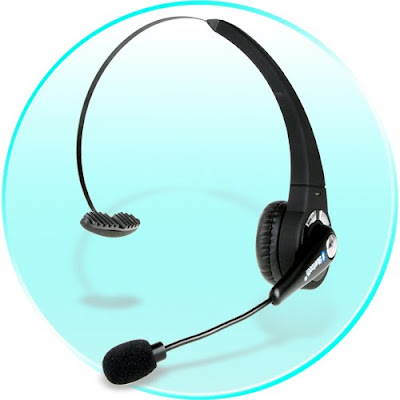
Wireless Computer Headsets

Till recently, few options were available to people interested in using cordless headsets with their computers. Dedicated wireless Headsets are available, however they often cost upwards of $200 US puttititle="Bluetooth Computer Headsets"ng them out of reach of the average user.

Bluetooth Headsets

Cellular telephone users have long embraced the benefits of Bluetooth Technology for use with their handsets. One of the more popular Bluetooth devices available to Cell phone users are Bluetooth Headsets. Although Bluetooth Headsets were initially quite expensive, the average price has dropped considerably in recent years bringing them within reach of millions of people.

Aside from using Bluetooth Headsets with Cellular Telephones, Bluetooth Headsets can be used just as effectively with computers. All one needs to do is make their computer ‘Bluetooth Enabled’ and the procedures involved in using the Bluetooth Headset with a computer compare with those used for cellular telephones.

Bluetooth Computer Headsets

There are literally hundreds of different Cellular Telephone Bluetooth Headsets available on the market. Any of these Headsets will work with your computer however end-users are anxiously awaiting the introduction of dedicated Bluetooth Computer Headsets. Although they haven’t hit the market at time of writing, rumours and press releases hint at the imminent arrival of dedicated Bluetooth Computer Headsets.

Price

Initially, one can anticipate that Bluetooth Computer Headsets will be relatively expensive when compared to their ‘corded’ couterparts. However, as with most computer-related hardware, the price should drop once additional manufacturers release Bluetooth Computer Headsets and competition thrives.

Logically, one could also anticipate that Bluetooth Computer Headsets will be less expensive to manufacture than their cellular telephone headset counterparts due primarily to the fact that a far lesser degree of miniturization will be required. Whereas cellular telephone Bluetooth Headsets are designed to be portable, Bluetooth Computer Headsets will likely be designed primarily for comfort, audio quality and range. Lesser miniturization generally results in lower manufacturing costs which hopefully will be passed on to the consumer.

Expectations

So what can one expect from a Bluetooth Computer Headset? Ideally they’ll be light-weight, comfortable, incorporate an integrated boom microphone, be capable of stereo sound and above all, be realistically priced. Furthermore, Bluetooth Computer Headsets should be simple to install/use and boast an operating range that encompasses the average user’s home or office.

Provided these basic requirements are met, Bluetooth Computer Headsets should prove extremely popular once released and we await their arrival with eager anticipation

Visit: Business Driven Technology (4th Edition) by Baltzan and Phillips

The FCC Unanimously Approves Mandatory 911 for VoIP Service

The Federal Communications Commission
The Federal Communications Commission unanimously approved a 10-page measure that will require Voice over Internet Protocol (VoIP) providers to provide a reliable 911 system to their customers. The measure will also require that state and local governments to levy taxes on VoIP service providers in exchange for providing access to 911 dispatchers. Internet phone providers have 120 days to improve the current 911 situations.

The new FCC Chairman, Kevin Martin stated, “The requirement to provide access to 911 is about public safety. Because the commission previously found that the VoIP services at issue were interstate, the commission assumed the responsibility to ensure that basic public safety requirements are implemented and satisfied.”

Currently VoIP service users who dial 911 run into many problems such as being redirected to administrative offices instead of a dispatcher. Also, when calls are received by dispatchers contact information for the caller such as the telephone number and location of the caller is not provided with the current VoIP 911 system. The lack of a reliable 911 system has brought several lawsuits against VoIP providers.

Sen. Conrad Burn, a sponsor of the bill made the comment, “The few seconds it takes someone to realize that their broadband connection cannot reach 911 can be the difference between life and death, and we cannot waste that time during an emergency.”

VoIP providers are being required to update and inform all customers, both new and old, of the limitations and problems that can come with calling 911 from a VoIP phone. The measure will require that 911 dispatchers must receive all calls to 911 and that the calls are accompanied by the caller’s information and location.

“Anyone who dials 911 has a reasonable expectation that he or she will be connected to an emergency operator. This expectation exists whether that person is dialing 911 from a traditional wire line phone, a wireless phone or a VoIP phone,” states Martin, “Today, we take this action to ensure this expectation is met as soon as possible.

Broadband phone service subscribers can check with their current VoIP provider for updates to their VoIP 911 plans. New updates and changes are being added to VoIP to meet the FCC’s new regulation so VoIP users are encouraged to check with their VoIP providers.


For More Information On Text Books Please Visit: Business Driven Information Systems (2nd Edition) by Baltzan

The Best VoIP Service – Sunrocket vs. Vonage and Packet8

The Best VoIP Service – Sunrocket vs.
Sunrocket internet phone service is one of the best VoIP deals available today for those looking for quality service at an inexpensive price. Once a very small player in the broadband phone game, Sunrocket has been growing by leaps and bounds and is now considered one of the best VoIP companies. With call quality comparable to top of the line broadband phone service providers Vonage and Packet8, Sunrocket is the leader when it comes to price.

Currently at $199 per year for unlimited local and long distance calling, Sunrocket will save you $100 a year compared to Vonage’s annual price of $299.88. Annual savings over Packet8′s 12 month price of $239.88 is around $40. With call quality being about equal among these three VoIP providers, if you’re looking for cheap unlimited local and long distance domestic phone service without a lot of extra bells and whistles, Sunrocket is the way to go.

Comparing VoIP Plans

All three providers include free Canada calling with their unlimited plans, online account management and billing, voicemail, voicemail to email, three way conference calling, call forwarding, call waiting, call return and speed dial. These basic features are pretty much standard among all VoIP service providers, and are included free. For most average telephone users who are used to land line service, these features are a nice “bonus”, as most POTS (plain old telephone service) users have to pay extra to get these enhancements.

Sun Rocket offers very low international rates, with many calling locations as low as .03 per minute. As a special promotion that has been running for some time, Sunrocket gives new subscribers a free cordless phone when they sign up via a referral.

At $24.99 per month, Vonage offers a larger set of features as well as unlimited international calling to most of Western Europe. Vonage has more enhanced features than Sunrocket, such as caller ID with name, call transfer, ring lists, international call blocking and click to call computer calling. International rates are very competitive.

For $19.99 per month, Packet8 also offers a larger set of free features with their unlimited local and long distance plan including caller ID blocking, anonymous call blocking, simultaneous ringing on multiple phone numbers, and a “find me, follow me” feature that can be set to ring different phone numbers one at a time until someone answers. Packet 8 also offers an optional video phone plan that is used with the video telephone they sell. This allows you to make videoconferencing phone calls with other video phone users. As like most VoIP providers, Packet 8 offers very competitive international rates. An unlimited international calling plan is available for an additional fee.

When comparing VoIP providers, you can see that all digital phone service plans are not created equal. If low cost is your primary goal, you make little to no international calls and you are happy with basic features, Sunrocket is a great choice. If you make frequent calls to Western Europe and want some extra features, Vonage is the option for you. If you want extra features, primarily call within the U.S. and Canada, or want to use video conferencing, Packet8 is an excellent choice.

No matter which internet phone service provider you choose, as long as you stick with a highly rated VoIP company that has a reputation for good voice quality of calls, you can’t go wrong. Broadband phone service is the future of telecommunications, and you can save a lot of money on phone bills by switching to VoIP. The only requirement is a broadband internet connection. For home or small business users, cable internet service will provide the biggest savings, as most DSL service requires a land line telephone service account.


For More Information On Text Books Please Visit: An Introduction to Object-Oriented Programming with Java(5th Ed)

Will VoIP be a Mass Market Product?

A common thinking among “Marketing people ” is that for every product that enters the market there must be a path, a target, a need ( real or created) that decides how the product must enter the consumer’s life, which part of the population is more likely to go for it, which niche it is going to fill and, most important “…certain things being stated, something other than what is stated follows of necessity from their being so.” and that is the final issue: the price.

Depending on those anavoidable patterns a product is more or less ready for a certain market.

High technologically devices, the ones that offer perfect quality and cost a fortune will target the elitarian market, where the price has not big importance (on the contrary, if the price would be lower than what certain people can afford, the product wouldn’t reach them) since it means luxury.

When a product ceases to be luxury and begins to be a need, then the mass market is ready. The product can enter 60% of consumers’ lives, reach easily a good upgrade in the percentage and become ” The New Product of the year 200….”.

Let’s consider the VoIP market.

Prior to recent theoretical work on social needs, the usual purpose of a product invoked individual (social) behaviors. We now know that these assumptions are not completely wrong.

Wrong would be NON considering them.

In systems where many people are free to choose between many options, a small subset of the whole offer will get a disproportionate amount of traffic (or attention, or income), even if no one of the system actively work towards such an outcome. This has nothing to do with moral weakness, selling out, or any other psychological explanation. The very act of choosing, spread widely enough and freely enough, creates a power law distribution.

Now, thanks to a series of breakthroughs in network theory by researchers we know that power law distributions tend to arise in social systems where many people express their preferences among many options. We also know that as the number of options rise, the curve becomes more extreme. This is a counter-intuitive finding – most of us would expect a rising number of choices to flatten the curve, but in fact, increasing the size of the system increases the gap between the #1 spot and the median spot.

In other words: give to the people the choice among desktop phones and mobile phones and the majority will choose what they think more convenient, in spite of the cost of the service.

In a way the cost of the service is the only left advantage in favour of the fixed telephony.

If the price was the same the desktop phones would disappear from the life of the average consumer (mass market consumer).

To see how freedom of choice could create such unequal distributions, consider a hypothetical population of a thousand people, each picking their favorite way of telecommunication. One way to model such a system is simply to assume that each person has an equal chance of liking each kind of telephony. This distribution would be basically flat – most kind of telephony will have the same number of people listing it as a favorite. A few will be more popular than average and a few less, of course, but that will be statistical noise. The bulk of the telephony will be of average popularity, and the highs and lows will not be too far different from this average. In this model, neither the quality of the voice, the availability, the design of the device nor other people’s choices have any effect; there are no shared tastes, no preferred genres, no effects from marketing or recommendations from friends.

This is the mass market of VoIP as dreamed and forecasted by most hardware producers.

People would choose VoIP in spite of the fact that the systems are not intercommunicating, the available phones are just desktop phones, most of the population doesn’t have a “Flat rate DSL” and some do not even have a decent connection, (just one ” UP to…) and just because VoIP means cutting cost.


For More Information On Text Books Please Visit: Advanced Programming Using Visual Basic 2008 1E Bradley

Will the Bell System Survive? A Massive Transfer of Wealth from Bell to VoIP is Underway

Will the Bell System Survive? A Massive Transfer of Wealth from Bell to VoIP Is Underway.

The “Internet Revolution” has brought us e-mail, the World Wide Web and quick, convenient ways to communicate that we’ve come to take for granted. And now it’s reached consumers who are looking for a more economical, more flexible way to talk on the phone. Voice over Internet Protocol (VoIP), also known as Broadband Phone or Internet Phone, now allows consumers to use their ordinary telephone to talk over the Internet at rates 50 to 60 percent below those charged by the Bell System, and with robust features that Bell cannot offer.

The Bell System has been our primary “channel” for connecting with friends, relatives and business associates for the last 100 years. Yet, in July, 2004, Michael Powell, the past Chairman of the Federal Communications Commission, which regulates the telephone industry, made this dramatic statement: “VoIP will irreversibly alter the world of communications. VoIP is the most significant paradigm shift in the entire history of modern communications since the invention of the telephone.”

Powell was quoted in Forbes Magazine, but why did he speak about VoIP in such striking terms?

For starters, the courts have ruled that VoIP voice services over the Internet are information services, not telecommunications services. As such, VoIP is not subject to the many taxes, regulatory fees and tariffs that Federal, State and local governments have piled onto the phone company over the years. Take a look at your latest phone bill and you’ll see that 30 percent or more of the monthly charge comes from these “junk fees.” Moving to VOIP phone service eliminates them, except for a trifling 3 percent Federal Excise Tax.

Second, unlike the phone company, VoIP service providers don’t have to install and maintain central offices, millions of miles of copper wire and fiber optic cable to carry your voice from point to point. The Internet is “already there,” just waiting to send your voice as a digital packet stream alongside other digital traffic. This huge savings on infrastructure costs, plus the elimination of “junk fees” translates into a savings of 50 to 60 percent per month, every month. A typical $65 per month phone bill usually costs about $25 per month with VoIP; saving a residential customer with a single phone line nearly $500 per year. For homes with two lines, savings can approach $700 per year.

Third, VoIP delivers sophisticated new features the phone company cannot. For example, Find Me service allows you to designate up to five phones that will ring in sequence, or simultaneously, to find you when you’re out of the office. Enhanced Voicemail lets you listen to voicemail from any web-connected PC or Mac, and to forward them as email attachments to anyone who might need to hear the voicemail. A web-based Call Manager lets you build a list of contacts you can dial simply by clicking on the person’s name. These conveniences not only increase productivity for busy people; they’re fun and easy to use. And of course all the features you already use ? call waiting, caller ID, call return, etc. are included in the standard VoIP service.

These factors working together have led market research firms, including Frost & Sullivan and the Yankee Group, to predict that consumers using VoIP phone service will increase from around one million now to over 18 million by 2007. Other estimates range as high as 30 million by 2007. Losing 18 to 30 million customers in the next few years is very likely keeping conventional phone providers awake at night.

The impact of the Internet on communication is pervasive. In July, 2005, the US Congress voted overwhelmingly (410 to 20) to reform the Postal Service to save it from a “death spiral” brought on by rising costs and declining business due to the impact of the Internet. The next few years should bring more challenges to the Bell System as millions of people drop their phone service in favor of the lower cost, richer features and convenience of VoIP communication.


For More Information On Text Books Please Visit: Absolute C++ (4th Edition) by Walter Savitch

Interactive Voice Response

Interactive Voice Response
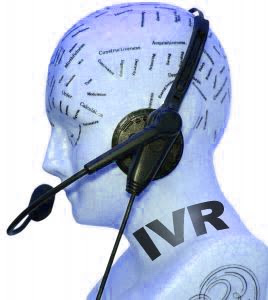
As the user’s interaction with the database is predetermined by what the IVR system will allow the user access to, IVR technology does not require human interaction over the telephone. Example, banks and credit card companies use IVR systems because their customers can receive up-to-date account information instantly and easily without necessarily speaking to a person. IVR technology is also used to gather information, such as telephone surveys in which the user is prompted to answer questions by pushing the numbers on a touch-tone telephone.

Generally the system plays pre-recorded voice prompts to which the person presses a number on a telephone keypad to select the option chosen, or engage in simple answers such as “yes”, “no”, or numbers in answer to the voice prompts. The latest systems use natural language speech recognition to interpret the questions that the person wants answered. One of the newest trends, Guided Speech IVR, integrates live human agents into the design and workflow of the application to enable speech recognition with human context.

Other innovations include the ability to speak complex and dynamic information. Examples would be an e-mail, news report or weather information using Text-To-Speech (TTS). TTS is a computer generated synthesized speech and is no longer the robotic voice people associate with computers. Real voices are used to create the speech in tiny fragments that are glued together before the caller hears it.

IVR systems can be used to create and manage many services such as telephone banking, order placement, caller identification and routing, balance inquiry, and airline ticket booking. Voicemail systems are different from IVR systems because they are a one-way communication tool (the caller leaves a message), but IVR systems attempt two-way interaction with the caller. Automatic call distributor (ACD) systems are often the first point of contact when dealing with any larger business, and can be used in place of more expensive IVR systems. IVR systems are mainly used at the front end of call centers to identify what type of service the caller wants and to extract numeric information such as account numbers as well as provide answers to simple questions like account balances or just to allow pre-recorded information to be heard.

IVR systems are often referred to as being unhelpful and difficult to use because of the poor design and lack of appreciation of the callers’ needs. A fully functional IVR system should connect callers to their desired service promptly and with minimal flaws.

IVR call flows are created in a variety of ways. Older systems, which depended upon proprietary programming or scripting languages, and modern systems, which are structured similar to WWW pages, using the VoiceXML or SALT languages. This allows any Web server to act as an application server, enabling the developer to focus on the call flow. Developers need not require specialized programming skills, as any Web developer already have the tools needed to create an IVR call flow.