

Will VOIP survive in 2012?

Will VOIP survive in 2012?

Without trying to state the obvious, VOIP has undergone a lot of changes and threats in the last 18months. However, will it survice beyond 2012?

>My answer is "yes" but not in the shape we are familiar with.

>Mobile VOIP, the new kid on the block, has chewed into a lot of market space where "traditional" VOIP used to enjoy its market share. Now "fixed" VOIP services seem to be feeling the same pain that fixed network providers felt when Smart Devices showed up out of nowhere. Quickly reducing costs/minute on calls equating to very little margins that soon may shrink to zero and large looming threat of web-based offerings (the likes of Facebook, Google, etc) that now are playing in a space that was once a service provider domain.

>

It all adds up to the fact that VOIP companies (if not already) need to start looking forward and adapting their business models accordingly.

Mobile VOIP is a shining example of this.

>

VOIP and providing rich media communications on Smart Devices (I dont call them mobile phones anymore, sorry!) is the now of the future. Unless your business is thinking about how to take its share of this market then your company is going to be faced with an ever-shrinking bottom line until eventually VOIP is offered as a FREE add-on, value-added service bundled into other services. That leaves your VOIP-based business where exactly? You guessed it, out in the cold.

>VOIP as such will be amalgamated into the 100,000's of Apps that can be downloaded onto your Smart Device. Love it or hate it, thats the future for VOIP.

So will VOIP survive in 2012 and beyond? Definitely yes Jim but not as we used to know it. What are your thoughts?

A Look at Internet Voice Technology (VoIP) for Residential

Today's Technology

Over the years, the technology has made remarkable progress. Telephony's improved data compression rate, better sound quality, and the availability of residential broadband has given consumers more affordable solutions with even more features than you might have currently. Today, there are a number of available service providers with most offering the equipment for free along with pricing packages that can reduce your phone bills by up to 50% or more.

How It Works

Internet Voice, commonly known as VoIP (Voice over Internet Protocol), uses your broadband Internet connection to make and receive phone calls instead of your regular phone line. It works by converting your phone calls to data packets and sends the information over your Internet connection, like email, and is received on the other end just like a regular phone call.

Source: Vonage.com

What's the advantage? Using your Internet connection instead of your phone line is less expensive. You can call anywhere, anytime for less and still get features like Call Waiting, Call Forwarding, Caller ID, 3-way Calling, and so much more.

One common misconception about VoIP is that it's a bandwidth hog, when, in fact, voice is a very efficient type of traffic. As a rule of thumb, 14 Kbps of bandwidth per call is ideal. This includes the compressed voice packet and the IP overhead. While your broadband connection will range from 768 Kbps - 1.5 Mbps, this is negligible and not worth concerning yourself over.

The Disadvantages

If you're considering replacing your traditional telephone service with Internet Voice, there are some things you should consider when looking at the various providers.

Some Internet Voice services don't work during power outages and the service provider may not offer backup power; Additional steps may be required for setting up 911 calls where you will need to register an address for location identification; or

DSL users cannot completely eliminate their land line because the broadband runs through this connection; or They may or may not offer white page listings.

Let's Talk Features

VoIP service providers offer different packages to fit your specific needs. Actual usage, desired features, and potential expansion capabilities will be the determining factors when selecting a package. The basic plans most VoIP providers offer include:

Low-cost Basic with Limited Usage
Unlimited US and Canada calls
Unlimited Business with Fax

You're almost certain to save money switching to VoIP. Not only is the monthly service itself generally less expensive than your current phone company's monthly service, the features you get with VoIP are much more extensive and are, most of the time, offered for free. Features like:

Web Based Administration - Allows you to configure your phone settings and log all your calls in real time.

Caller ID - Standard with all VoIP service providers.

Voice Mail - Replaces your answering machine and lets you listen to voice messages on-line.

Call forwarding - Forward calls to your cell, office, or any other number after a predetermined number of rings.

Portability - Take your phone adapter anywhere around the world, use your same phone number, and call anytime, anywhere in the US for free, and vice-versa

Software Phone - this application can be installed on any PC and will function exactly the same way as any VoIP phone

Call Transfer
3-way conferencing v Call return
What You Need

An Internet connection - While VoIP works with a regular 56kbps dial-up connection, it is highly recommended you use a Cable or DSL broadband connection.

A Computer - The only reason you will need a computer (PC or Mac) is to configure the phone adaptor to work with your broadband service provider. Once this is done, you will not need to do this again.

A Digital Phone Adapter - DPA's, also referred to as phone adapters, are provided mostly free of charge. This is similar to your Cable/DSL router that converts the signal to use a regular phone or fax unit.

A Telephone - There are also options for plugging in multiple phones to a single DPA unit.

A VoIP Service provider - There are several available. Here are a few you might want to check out:

Take Advantage of Internet Phone Calls (VOIP)

Voice over IP (VOIP) is a relatively new technology. Voice Over IP allows people to leave behind the old and very traditional analogue phone networks and now adapt in favor of the very new and very progressive Internet-based calling system infrastructure. Using this technology for your communications actually works out cheaper for you in the long run as it means you won't need to pay for calls if the people you are calling and speaking to are also using the same VOIP system.

Voice Over IP runs on several different types of infrastructure. This is the main reason why you should take the time to do your homework and find out how it works and what is involved, before you even consider setting up a Voice Over IP network at your home or place of business. When you do your homework you will see that invariably VOIP offers lots of advantages over and above the standard traditional telephone based analogue service that most people are currently using. Let's take a moment to examine some of the advantages of using Voice Over IP.

The main advantage of Voice Over IP is to be honest - the cost - the cost benefit goes directly back into your pocket. And because Voice Over IP uses the infrastructure of the Internet to make outgoing calls, you will never need to pay your traditional phone provider to maintain a telephone line or for phone and line rental. In addition, many Voice Over IP service providers allow customers to make long distance calls that attract minimal or no long distance charges at all. Many service providers even offer customer VOIP packages that allow you to opt for discounted internet call rates so you can save even more.

But what about this for a benefit? If you have Voice Over IP software installed on your PC and you want to speak to someone who is also uses Voice Over IP, then you are able to talk for as long as you want without having to pay a single cent. This is because your voice is actually transformed into digital data packets rather than audio, and the data is transferred in a similar fashion to that of email. Voice Over IP also makes it very easy and cheap to conduct conference calls and video calls.


3CX and Grandstream Announce Strategic Partnership

3CX and Grandstream

3CX, the international developer of the award-winning 3CX Phone System for Windows and Grandstream, a leading designer and manufacturer of next generation IP Voice and Video products for broadband networks, announced today a strategic partnership. Under the terms of the agreement, 3CX will become one of the preferred PBX partners of Grandstream, and 3CX will fully certify and integrate Grandstream’s broad portfolio of IP phones, gateways and multimedia phones, allowing for customers to easily provision and manage Grandstream phones from the 3CX Management console. With the integration, initial configuration and setup of a complete phone system will be much easier and ongoing management will be reduced. 3CX and Grandstream will also commit to advanced feature development and providing end-to-end support to customers, giving companies peace of mind that the complete solution is supported by both companies.

“We are pleased to establish a partnership with 3CX to promote the combination of the market leading software-based 3CX Phone System and the award-winning Grandstream IP phones and multimedia phones. This best-in-class product combination creates an excellent value and innovative solution for the SME market,” said David Li, CEO of Grandstream Networks.
“The combined 3CX & Grandstream solution is very easy to install and manage for customers, and is a great replacement for outdated proprietary phone systems. Because both products are standards-based, customers do not get tied in with one particular vendor and companies can buy best of breed, with full confidence in the complete solution,” said Nick Galea, CEO at 3CX.
The partnership has already resulted in benefits for customers and resellers: 3CX has shipped enhanced Grandstream phone support in Service Pack 4 of 3CX Phone System 9. It is now possible to provision and manage Grandstream phones from the 3CX management console, including the ability to upgrade the firmware network wide via the 3CX management console.

Grandstream has also launched a special reseller program which allows resellers and distributors to get rebates for selling Grandstream phones with 3CX solutions. 3CX was hereby one of the first suppliers to sign on with Grandstream’s reseller program as a result of the completion of extensive testing and 3CX getting full certification to Grandstream’s entire endpoints product line.

Secure Your Mobile Devices with 3CX Mobile Device Manager

3CX Mobile Device Manager
As mobile phones are here to stay, it's important to protect your privacy when using them just as you should with your desktop computer.

Unfortunately, many people overlook mobile phone security but this can be dangerous. Thanks to this lack of security awareness, many hackers can take advantage, making many people victims of. It can take countless hours to undo the harm that can be done to your reputation and finances, and sometimes a full recovery is impossible. It's crucial, then, to have security policies in place such as a strong password, in order to protect your company's sensitive data.

You don’t just have to worry about the threat from hackers and malware on your mobile devices. It's also possible that an employee may lose a phone, or have it stolen. 3CX Mobile Device Manager offers real time mobile tracking in order to find a lost mobile as well as to see what routes it has taken.

You can remote lock your device in order to protect the data on it, and as a last resort you can even remotely wipe all data from a mobile device and any attached storage cards. This feature means that you can rest assured that no identity theft can occur and no sensitive corporate data gets exposed.

Voxbone Sees Continued VoIP Growth After Strong 2011

Voxbone

Voxbone announces that despite economic uncertainties in some parts of the world last year, its pattern of steady year-after-year growth in VoIP communications continued as demand from existing customers increased, coupled with new business wins from some of the fastest-rising operators in telecommunications.

The company is calling 2011 a breakthrough year because it enjoyed lift for the first time from customers such as Telefónica and iBasis, while most growth came from direct sales to its customers among providers of next-generation VoIP communications services. Overall, Voxbone said, revenue grew 19 percent, while minutes of use on its global network increased by 33 percent to 2.8 billion.

The company’s trajectory of growth over the past several years reflects the evolution toward Internet-based communications services in business and consumer applications, and away from older and longer-established legacy switched networks. For example, as a result of large corporations adopting cloud communications during 2011, Voxbone saw a significant upswing in business with global B2B network service providers.

Other indicators of growth for Voxbone in 2011, including:

* Gaining Deloitte “Technology Fast 50 Benelux” recognition as the fastest-growing technology company in Belgium;
* Expanding its global presence by having its United States subsidiary become incorporated, appointing regional business development executives in North America and Southeast Asia, opening an office in Mumbai, and extending services to Vietnam;
* Deploying its own network infrastructure in Germany, Luxemburg and Spain;
* Being selected by the United Nations to implement the UN’s own unique country code for disaster relief: +888;
* Moving to vibrantly colored new headquarters in central Brussels that nearly tripled the amount of occupied office space;
* Growing to 67 employees worldwide and truly embodying a multicultural global company by employing people representing 23 nationalities.

This year, Voxbone plans to launch a series of new product lines, enhance its existing services, and expand its network footprint from its current 51 countries to an additional five to seven countries in Asia and South America.

VoIP Charges are a case of ‘tail wagging dog’

The Federal Communications Committee (FCC) in America is letting the tail wag the dog, according to search giant Google.

Proposed plans to charge Voice over Internet Protocol(VoIP) on a per minute basis in the same way as regular telephony could be a huge blow to the industry says Google.

The have accused the USA telecoms regulator of trying to stifle what is a rapidly expanding industry with possible call termination charges.

Currently one of the factors which makes VoIP so appealing is that information can be routed over the internet free of charge (once the internet subscription has been set up).

Up until now an ESP exemption has meant that VoIP traffic is free of charge. While telecommunications companies have railed against this disadvantage, VoIP providers have claimed that information, and this is basically what is being sent over the VoIP lines, should be free on the internet.

The Google lawyer Donna N. Lampert wrote to the FCC to persuade them to see the bigger picture – VoIP traffic is a very small part of the overall IP traffic which Google deals with.

Yet VoIP services like Skype have long been trying to monetise what is essentially a free service. Although Skype has millions of users only a small fraction of them are paying subscribers.

The Google figures show that VoIP calls now account for 21,000 terabytes a month compared to the 36,000 terabytes used for conventional calls.

Regular telephone traffic is certainly declining and it is clear that there will have to be a shift in the way it is administered as a result.

Lightyear Network Solutions Offers VoIP in the Cloud

Lightyear Network Solutions

Hosted VoIP and cloud computing are the two standards which business service provider Lightyear Network Solutions has chosen to take it into the future.

The company is on the verge of rolling out VoIP in the cloud to small and medium sized businesses.

That will allow their customers to keep and integrate their existing traditional PBX (if preferred) with VoIP solutions for business.
Despite losing company founder Sherman Henderson recently the company is determined to plough on by increasing its portfolio and expanding its network services.

The new CEO Stephen M. Lochmueller told Fiercevoip: "We are pleased to announce the launch of our new product, which further enhances our extensive portfolio. Hosted VoIP is part of our strategic plan to make the cloud valuable and affordable for SMBs.”
Lightyear Network Solutions already has a strong customer base in the USA.
Hosted VoIP allows them to increasingly offer flexible and scalable solutions which can save companies costs and deliver fixed mobile convergence.

Service Options for Businesses

Most small businesses will want to choose a hosted VoIP service, where the equipment and maintenance are handled by the hosting service provider. This allows for extremely rapid installation of a new system in most cases, normally within weeks (“But it can take up to a month if the existing business number is to be ported to a VoIP service provider,’ notes Scarborough).

The number of providers offering hosted VoIP phone services is growing rapidly. Their competition for your business lets you find the best possible rates and features. VoIP makes sense for businesses that are exploring ways to reduce their telecommunications fees. The technology has gotten better; it’s cheaper, and can be implemented relatively rapidly. But beyond cost savings, it allows businesses to access a large number of features that are unavailable to them with traditional phone services.

“I believe that the greatest advantage of VoIP phone services is that it allows a business to ‘future proof’ its phone system,” says Scarborough. “All too often, a company will invest $30,000 (or more) into a traditional system that works for them for a few years, and then they discover they’ve outgrown it. You don’t outgrow your VoIP service, because it’s simple to add new lines and phones, and to align features to communication needs of the individual user. Businesses that use it know they have access to the latest features, since these are always being upgraded with the latest VoIP hosting software.”

For many businesses, the future will be leveraging VoIP services, with reduced costs and the ability to integrate voice with other data-based technologies. The bottom line is improved customer service and higher productivity, and VoIP service is proving that it delivers both to a greater degree than was possible before.

Faxing over VoIP

Faxing over VoIP
As far as VoIP has come in Voice telephone calls, faxing over VoIP still has a lot of room to improve.

Have you ever tried to fax on your residential VoIP line? I have, and it didn't go well. After doing some research on the subject I found out that the voice traffic and the Fax traffic are best run over two different codecs. This is why when most VoIP carriers sell you a business account they include a free additional fax line with the faxing specific codec to allow for faxing.

Faxing on a Voice VoIP line is possible but not recommended. You can fax a page or two over your Voice VoIP line but it may take you several attempts to accomplish. The reason is when the fax tone is digitized into packets, there is packet loss. Packet loss on a voice is not that critical because even with a little packet loss, you can still hear and understand what the person is saying. But, when there is packet loss on a fax, any little bit can really mess up the fax. The result can be a bad fax, error message, or even a dropped call. When faxing over a Fax Codec, the loss of packets is minimized and faxes generally make it to its destination, but in the case of a large fax (10+ pages) your chances of a successful fax diminish. It is recommended that a customer who is planning on faxing quite a bit get a fax machine that also doubles as a scanner and can convert potential faxes into a .PDF file so if the fax over VoIP does not work, the customer can email the fax.

Programmers are coming up with a better codec all the time, so it is only a matter of time before VoIP providers come up with a more reliable faxing VoIP codec. VoIP is here to stay and the VoIP providers are trying to overcome all of the objections from small businesses to gain their business, and faxing is a large issue for small businesses. I have the utmost confidence in VoIP providers to come up with a solution that is viable by the end of 2005 or earlier.

Faxing is only one of the things to consider before choosing a VoIP solution. In fact, there are many things to consider when choosing a VoIP provider.

Mobile VoIP - Voice On The Go !

Mobile VoIPMobile VoIP - (Mobile Voice over Internet Protocol) is the application of voice over IP technology to mobile devices (PDA, Pocket PC or Smartphone).

Mobile VoIP requires a mobile handset that supports, at minimum, high speed IP communications. Most commonly this is using Voice over Wi-Fi or VoWiFi, but the same protocols typically SIP or Jabber can be used over any broadband IP-capable wireless network connection such as the various 3G standards, EVDO rev A. (which is synchronously high speed - both high speed up and down), HSDPA or potentially WiMax.

Mobile VoIP will require a compromise between economy and mobility. For example, Voice over Wi-Fi offers free service but is only available within the coverage area of the Wi-Fi Access Point. High speed services from mobile operators using with probably have better audio quality and capabilities for metropolitan-wide coverage including fast handoffs from mobile base station to another, yet it will cost more than the typical Wi-Fi based VoIP service.

Mobile VoIP will become an important service in the coming years as device manufacturers exploit more powerful processors and less costly memory to meet the users' needs for ever-more power in your pocket. Smartphone in mid-2006 are capable of sending and receiving email, browse the web and in some cases watch TV.

The challenge for the mobile operator industry is to deliver the benefits and innovations of IP without losing control of the network service. Users like the Internet to be free and high speed without extra charges for visiting specific sites versus other sites. Delivering mobile VoIP is a service that challenges the most valuable service in the telecommunications industry – Voice. The opportunities, threatens and pace of innovation in the global communications industry.

Ecommerce VoIP provider TelcoDepot.com Launches Expanded range of TalkSwitch VoIP Phone Systems on on-line Store

Talkswitch VoIP Phone

Ecommerce VoIP Equipment and VoIP service supplier TelcoDepot.com has launched an expanded vary of industry-leading TalkSwitch VoIP phone systems on its on-line phone system store. TalkSwitch VoIP solutions are optimized for little businesses and deliver increased productivity, performance and potency. TelcoDepot.com additionally provides business phone systems, Hosted PBX solutions, VoIP phones, business VoIP service, conferencing system solutions, Microsoft Response purpose solutions, VoIP gateways, phonephone equipment accessories and phone system support solutions for businesses.

TalkSwitch provides small businesses with great VoIP systems and productivity tools that enable them to try to do more with less since operating more efficiently and growing with ease. TelcoDepot.com currently stocks a full range of VoIP equipment and tools from TalkSwitch.

“TalkSwitch is synonymous with little Business VoIP systems, and their product are designed with the small guy in mind; combining wonderful business communication options with great software, productivity tools and the power of VoIP, they are a good work for a small businesses trying to change to VoIP as simply and affordably as potential without compromising scalability and performance," says Yaron Ram, Principal at TelcoDepot.com.TelcoDepot.com provides the complete suite of TalkSwitch VoIP Phone systems, accessories and software, with great support choices for installation, cabling, programming, shipping and a lot of.


TalkSwitch Auto Attendant and Voicemail memory upgrades are also offered from TelcoDepot.com including one hour, 2 hours, 4.5 hours and nine hours packages.** TalkSwitch VoIP systems from TelcoDepot.com come loaded with options and choices that boost little business productivity while being scalable and versatile.

TelcoDepot.com Launches New Microsoft Lync VoIP Phones on on-line Store

Microsoft Lync VoIP Phone

TelcoDepot.com has launched a brand new assortment of Microsoft Lync compatible VoIP Phones on its on-line phone system store. TelcoDepot.com currently offers VoIP phone solutions that integrate with Microsoft Lync to deliver a really unified, wealthy and collaborative corporate communications surroundings leveraging IM, Voice, file sharing, video conferencing and additional to expand and enhance the capabilities of traditional IP PBX systems.

Microsoft Lync was designed with corporate needs in mind and delivers a really unified communications environment that uses wealthy integrated communications solutions together with Instant Messaging, Voice over IP, document collaboration, file sharing, video conferencing and alternative solutions to increase the scope, usability, productivity and effectiveness of traditional IP PBX systems within the workplace.

TelcoDepot.com offers an assortment of Microsoft Lync compatible VoIP phones and solutions together with the Clear One Chat seventy HD personal speakerphone, connects to laptop for wealthy hands-free audio communication, Jabra DIAL 520 MS USB handset solution, Jabra SPEAK 410 MS Microsoft Lync optimized USB speakerphone, Plantronics 82783-11 P540-M USB Phone for Lync, Aastra 6725i VoIP phone for Microsoft Lync OCS 2010, Aastra 6721i VoIP phone for Microsoft Lync OCS 2010, Snom 821 VoIP phones, Snom 720 VoIP phones, Snom 300 SIP-based VoIP phones, Polycom CX200 desktop phone for OCS, Plantronics 81402-02- Calisto P420M USB speakerphone for Microsoft Lync, Polycom CX100 speakerphone for OCS, and the Polycom CX300 desktop phone for Microsoft Lync.

Discounts are available on all Microsoft Lync compatible VoIP Phones purchased from TelcoDepot.com; please ask with TelcoDepot customer Care.“Microsoft Lync permits businesses to expand and extend their existing IP-PBX primarily based communications systems to really harness the power of the net by integrating IM, Voice over IP, document collaboration and file sharing, video conferencing and real-time communications. TelcoDepot.com is glad to supply our shoppers’ certified Microsoft Lync compatible VoIP phone solutions for their Microsoft Lync based networks,” says Yaron Ram, a TelcoDepot.com principal.

Voice over IP Telephony spells the tip for ancient

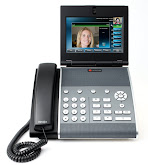
VoIP phone


Voice over net Telephony is technology which means you'll be able to hold telephone calls over the web or an IP network. It eliminates the need for having separate lines for your web association and dedicated voice transfer lines. There are several benefits to VoIP however as a result of it is still an advancing technology you wish to buy around to find the most effective deal. No cumbersome circuit switching is needed and there is no depletion within the bandwidth related to traditional twin line systems. VoIP protocol implies that information is only sent over the network when it has to be, releasing up that bandwidth when you aren't making 'calls'.

Advantages of VoIP

Voice over Internet Telephony isn't widely used in office networks, let alone in the home, however if you make international phone calls then you are probably being routed through IP infrastructure because of the lower costs of calls. What this does mean, though, is that the infrastructure is quite obviously already in place and anyone who chooses can do so easily. This means that you can 'call' friends, family or associates using your own VoIP without the need for them to have the same technology installed.

The costs are phone calls that are reduced dramatically by using VoIP and once the infrastructure is in place there are usually little or no extra infrastructure charges required making it a value effective and cheap telephony solution.

Because VoIP is a new technology you get the standard advantages of employing a brand new technology; increased technological advances and new technologies are employed meaning you get a state of the art system. Telecommunications suppliers have been regularly using IP networks to transfer voice information and most of the teething issues have been totally investigated and ironed out and every one the advancements made have been integrated into a system you'll be able to have put in your home, workplace or business. You don't essentially have to send your calls over the net, and for more secure calls you can use non-public IP networks.

Some disadvantages

VoIP, as a technology, is still in its infancy and new developments are being found every day. However, there are limitations to the service and the technology which needs to be addresses before it will become an entire replacement for your standard phone line. In addition, you can't send or receive faxes and you can't route traditional modems, alarm systems or satellite systems through your VoIP connection, because they need access to a voice grade phone line.

Does Voice Over IP Telephony Spell the End for Traditional Telephones?

Just What is Voice Over IP Telephony?

Voice over Internet Telephony is technology that means you can hold telephone calls over the Internet or an IP network. It eliminates the need for having separate lines for your Internet connection and dedicated voice transfer lines. There are many advantages to VoIP but because it is still an advancing technology you need to shop around to find the best deal. No cumbersome circuit switching is required and there is no depletion in the bandwidth associated with normal dual line systems. VoIP protocol means that voice data is only sent over the network when it needs to be, freeing up that bandwidth when you aren't making 'calls'.

What are the Advantages of VoIP.

Voice over Internet Telephony isn't widely used in office networks, let alone in the home, however if you make international phone calls then you are probably being routed through IP infrastructure because of the lower costs of calls. What this does mean, though, is that the infrastructure is quite obviously already in place and anyone who chooses can do so easily. This means that you can 'call' friends, family or associates using your own VoIP without the need for them to have the same technology installed.

The costs are phone calls that are reduced dramatically by using VoIP and once the infrastructure is in place there are usually little or no additional infrastructure charges required making it a cost effective and affordable telephony solution.

Because VoIP is a new technology you get the usual advantages of employing a new technology; increased technological advances and new technologies are employed meaning you get a state of the art system. Telecommunications providers have been regularly using IP networks to transfer voice data and so most of the teething problems have been thoroughly investigated and ironed out and all the advancements made have been integrated into a system you can have installed in your home, office or business.

You don't necessarily have to transmit your calls over the Internet, and for more secure calls you can use private IP networks. For this reason many large businesses already have IP systems in place making inter-business calls much cheaper.

Electronic numbering makes it possible to dial traditional E 164 phone numbers connected entirely by your Internet connection. This means that you won't face any call charges whatsoever, and all you will have to pay will be the cost of your Internet connection.

Is VoIP available for me to use now?

Companies like Vonage, VoicePulse and Packet8 are already offering flat monthly fees for their VoIP services meaning you can call anywhere in the country (sometimes even to other selected countries around the world) and only ever pay one flat monthly fee.

Vonage offer a service for $24.99 a month that allows you to call anywhere in the US or Canada. They also offer similar plans for small businesses.

Are there any disadvantages to VoIP?

VoIP, as a technology, is still in it's infancy and new developments are being found every day. However, there are limitations to the service and the technology which need to be addresses before it can become a complete replacement for your standard phone line.

Because the Internet knows no geographic boundaries it means that, for example, calling the emergency services would not necessarily put you through to your local emergency dispatch centre.

In addition, you can't send or receive faxes and you can't route traditional modems, alarm systems or satellite systems through your VoIP connection, because they require access to a voice grade phone line. For the moment VoIP is a compliment to your traditional phone line, rather than a replacement, until these problems can be ironed out.

Google Paints VoIP IP Telephony Chrome


The news that Google is working to install VoIP IP Telephony into its Chrome browser has passed relatively unnoticed this week but it could be one of the most seismic shifts to hit the way we work and communicate.

Currently using VoIP services requires pulling up a piece of hardware or software, or just clicking on your preinstalled Skype button.
Imagine the amount of time that could be saved by just accessing VoIP numbers directly through your browser?

Not only does that benefit users, but it fits into Google’s idea of personalized search. Having access to your call information as well as your search information will give Google even more targeted information about you.

There are two ways to look at that. Firstly it will either be useful as searching for exactly what you want will become quicker and more efficient. On the other hand it is quite scary to think about quite how much information Google now has about us, everything from when we were born to where we like to shop.

Yet the search giant will not mull over these important concerns and instead is plowing ahead with its open source VoIP IP Telephony project which will incorporate audio and video. Known as WebRTC, Chrome VoIP will now give access to real-time chat on our browser thanks to the collaboration of Google and their VoIP acquisition GIPS.

The Calling Card Alternative

The Calling Card AlternativeFor a few years now, the calling cards business is booming. Everywhere you go, everywhere you search you might find one: in WallMarts, grocery stores, newspaper stands, vending machines in coffee shops. But the place you can find the most of these long distance alternatives is the internet. A quick search on Google, Yahoo or other search engines will reveal thousands of websites that sell calling cards. So,it's an easy pick, one might say. Well... not quite.

According to the FCC, almost 70% of the calling card businesses are fraudulent. Meaning mostly that they get your money but you don't get the calling card. That means that you have to be very careful when choosing a website to buy from. On top of that, calling cards vary in number and features, so you have to choose the one appropriate to your needs. Their low rates however, come with a price at times. Companies selling calling cards use VoIP technology and other third party carriers to complete their calls. While not as expensive as a satellite connection (hence the low rates), this technology is at the beginning, so problems may occur from time to time. This is why calling cards are not usually recommended for emergency calls. For calls within the United States however, calls made with calling cards (also known as phone cards) have a good quality and connection rate, given that you have found a good supplier.

So here are the steps you need to take to get the best out of your calling card purchase:

- Find a reliable website (this means no weird pop-ups, no advertisement of Viagra on the website - you get my point).

- Take a look at the available calling cards and rates.

- Check out any details of calling cards: usually, next to or underneath the picture of the calling card there is a link that will take you to a "Details" page. Look for maintenance fees, rounding, any other surcharges, expiration dates.

- If you intend to make a lot of long calls over a short period of time, choose a card with a maintenance fee. This means that a certain amount will be deducted from your balance each week/month until you use up the card. But if you plan to make so many calls, you'll probably use the card up by the time the maintenance fee is deducted. Calling cards with maintenance fees also tend to have lower rates.

- If you use the card just once in a while, choose a card with no maintenance fee. These cards usually have higher rates, but you don't have to worry about your balance going down if you do not use the card.

- Look for a Customer Service number. Reliable companies have Customer Service, in case their customers have questions or problems.


O2 Secure Wireless enters the Mobile VoIP Market

O2 Secure Wireless is entering the mobile VoIP Market with an unlimited VoIP service to provide talk, text and data at low prices.

Now that the VoIP market is worth an estimated $50 billion per year (and rapidly expanding), O2 Secure Wireless has sensed an opportunity in the market and created the O2USA brand.

The website and product is still in its rudimentary stages but you can visit it for an idea of the plans that they offer. However having tried to look for shops in locations (I entered 90210 as it was the only American postcode I could think of having grown up on the TV series) the search facility returned no results.

Once the glitches are ironed out, O2USA will work on both the Sprint and Verizon networks, two of the most popular mobile VoIP networks in America. O2 already has a strong infrastructure in the USA and other regions nearby such as the Caribbean.

Val Kazia, the Chief Executive Officer of O2 Secure Wireless, said: "O2 Secure Wireless is clearly in a highly desirable position to enter this sector. The potential to make the O2 trademark a nationally recognized name is unlimited.”

Nevertheless O2 had to put a warning about future looking statements under the Safe Harbour Act, presumably because the necessary regulation for this product is still being undertaken.

Lightyear Network Solutions Offers VoIP in the Cloud


Hosted Voip and cloud computing are the two standards which business service provider Lightyear Network Solutions has chosen to take it into the future.

The company is on the verge of rolling out VoIP in the cloud to small and medium sized businesses.

That will allow their customers to keep and integrate their existing traditional PBX (if preferred) with VoIP solutions for business.
Despite losing company founder Sherman Henderson recently the company is determined to plough on by increasing its portfolio and expanding its network services.

The new CEO Stephen M. Lochmueller told Fiercevoip: "We are pleased to announce the launch of our new product, which further enhances our extensive portfolio. Hosted VoIP is part of our strategic plan to make the cloud valuable and affordable for SMBs.”

Lightyear Network Solutions already has a strong customer base in the USA.
Hosted VoIP allows them to increasingly offer flexible and scalable solutions which can save companies costs and deliver fixed mobile convergence.

VoIP and 911 Warning


Be leery of your VoIP phone system in case of emergencies. 911 services may not be available to you or will be limited. You should put local emergency numbers by or on your phone in case you have a problem until the providers get this sorted out this fall. The FCC has been after VoIP providers to fix this problem and just recently extended the deadline. But for you and me, that means we have to be careful in emergencies or be left stranded trying to dial 911.

Providers of VoIP (Voice over Internet Protocol) phone service have been told by the FCC to warn customers of potential problems of using 911 as an emergency number. The FCC told providers they should obtain acknowledgements from their subscribers and if they didn't, then they should turn off their service.

The VON coalition, a group of VoIP providers which include AT&T and MCI, were concerned of what would happen to their customers if they were cut off. Some portion of the subscribers typically won't respond to a request. Is it in the public's best interest to disconnect these people?

There are about 1.7 million VoIP subscribers nationwide and this cut off from the FCC could have potentially disrupted service for 100,000 people. The FCC issued this decree in May after a woman was unable to get 911 help to save her dying daughter.