The Best VoIP Service – Sunrocket vs. Vonage and Packet8

The Best VoIP Service – Sunrocket vs.
Sunrocket internet phone service is one of the best VoIP deals available today for those looking for quality service at an inexpensive price. Once a very small player in the broadband phone game, Sunrocket has been growing by leaps and bounds and is now considered one of the best VoIP companies. With call quality comparable to top of the line broadband phone service providers Vonage and Packet8, Sunrocket is the leader when it comes to price.

Currently at $199 per year for unlimited local and long distance calling, Sunrocket will save you $100 a year compared to Vonage’s annual price of $299.88. Annual savings over Packet8′s 12 month price of $239.88 is around $40. With call quality being about equal among these three VoIP providers, if you’re looking for cheap unlimited local and long distance domestic phone service without a lot of extra bells and whistles, Sunrocket is the way to go.

Comparing VoIP Plans

All three providers include free Canada calling with their unlimited plans, online account management and billing, voicemail, voicemail to email, three way conference calling, call forwarding, call waiting, call return and speed dial. These basic features are pretty much standard among all VoIP service providers, and are included free. For most average telephone users who are used to land line service, these features are a nice “bonus”, as most POTS (plain old telephone service) users have to pay extra to get these enhancements.

Sun Rocket offers very low international rates, with many calling locations as low as .03 per minute. As a special promotion that has been running for some time, Sunrocket gives new subscribers a free cordless phone when they sign up via a referral.

At $24.99 per month, Vonage offers a larger set of features as well as unlimited international calling to most of Western Europe. Vonage has more enhanced features than Sunrocket, such as caller ID with name, call transfer, ring lists, international call blocking and click to call computer calling. International rates are very competitive.

For $19.99 per month, Packet8 also offers a larger set of free features with their unlimited local and long distance plan including caller ID blocking, anonymous call blocking, simultaneous ringing on multiple phone numbers, and a “find me, follow me” feature that can be set to ring different phone numbers one at a time until someone answers. Packet 8 also offers an optional video phone plan that is used with the video telephone they sell. This allows you to make videoconferencing phone calls with other video phone users. As like most VoIP providers, Packet 8 offers very competitive international rates. An unlimited international calling plan is available for an additional fee.

When comparing VoIP providers, you can see that all digital phone service plans are not created equal. If low cost is your primary goal, you make little to no international calls and you are happy with basic features, Sunrocket is a great choice. If you make frequent calls to Western Europe and want some extra features, Vonage is the option for you. If you want extra features, primarily call within the U.S. and Canada, or want to use video conferencing, Packet8 is an excellent choice.

No matter which internet phone service provider you choose, as long as you stick with a highly rated VoIP company that has a reputation for good voice quality of calls, you can’t go wrong. Broadband phone service is the future of telecommunications, and you can save a lot of money on phone bills by switching to VoIP. The only requirement is a broadband internet connection. For home or small business users, cable internet service will provide the biggest savings, as most DSL service requires a land line telephone service account.


For More Information On Text Books Please Visit: An Introduction to Object-Oriented Programming with Java(5th Ed)
Will VoIP be a Mass Market Product?

A common thinking among “Marketing people ” is that for every product that enters the market there must be a path, a target, a need ( real or created) that decides how the product must enter the consumer’s life, which part of the population is more likely to go for it, which niche it is going to fill and, most important “…certain things being stated, something other than what is stated follows of necessity from their being so.” and that is the final issue: the price.

Depending on those anavoidable patterns a product is more or less ready for a certain market.

High technologically devices, the ones that offer perfect quality and cost a fortune will target the elitarian market, where the price has not big importance (on the contrary, if the price would be lower than what certain people can afford, the product wouldn’t reach them) since it means luxury.

When a product ceases to be luxury and begins to be a need, then the mass market is ready. The product can enter 60% of consumers’ lives, reach easily a good upgrade in the percentage and become ” The New Product of the year 200….”.

Let’s consider the VoIP market.

Prior to recent theoretical work on social needs, the usual purpose of a product invoked individual (social) behaviors. We now know that these assumptions are not completely wrong.

Wrong would be NON considering them.

In systems where many people are free to choose between many options, a small subset of the whole offer will get a disproportionate amount of traffic (or attention, or income), even if no one of the system actively work towards such an outcome. This has nothing to do with moral weakness, selling out, or any other psychological explanation. The very act of choosing, spread widely enough and freely enough, creates a power law distribution.

Now, thanks to a series of breakthroughs in network theory by researchers we know that power law distributions tend to arise in social systems where many people express their preferences among many options. We also know that as the number of options rise, the curve becomes more extreme. This is a counter-intuitive finding – most of us would expect a rising number of choices to flatten the curve, but in fact, increasing the size of the system increases the gap between the #1 spot and the median spot.

In other words: give to the people the choice among desktop phones and mobile phones and the majority will choose what they think more convenient, in spite of the cost of the service.

In a way the cost of the service is the only left advantage in favour of the fixed telephony.

If the price was the same the desktop phones would disappear from the life of the average consumer (mass market consumer).

To see how freedom of choice could create such unequal distributions, consider a hypothetical population of a thousand people, each picking their favorite way of telecommunication. One way to model such a system is simply to assume that each person has an equal chance of liking each kind of telephony. This distribution would be basically flat – most kind of telephony will have the same number of people listing it as a favorite. A few will be more popular than average and a few less, of course, but that will be statistical noise. The bulk of the telephony will be of average popularity, and the highs and lows will not be too far different from this average. In this model, neither the quality of the voice, the availability, the design of the device nor other people’s choices have any effect; there are no shared tastes, no preferred genres, no effects from marketing or recommendations from friends.

This is the mass market of VoIP as dreamed and forecasted by most hardware producers.

People would choose VoIP in spite of the fact that the systems are not intercommunicating, the available phones are just desktop phones, most of the population doesn’t have a “Flat rate DSL” and some do not even have a decent connection, (just one ” UP to…) and just because VoIP means cutting cost.


For More Information On Text Books Please Visit: Advanced Programming Using Visual Basic 2008 1E Bradley

Will the Bell System Survive? A Massive Transfer of Wealth from Bell to VoIP is Underway

Will the Bell System Survive? A Massive Transfer of Wealth from Bell to VoIP Is Underway.

The “Internet Revolution” has brought us e-mail, the World Wide Web and quick, convenient ways to communicate that we’ve come to take for granted. And now it’s reached consumers who are looking for a more economical, more flexible way to talk on the phone. Voice over Internet Protocol (VoIP), also known as Broadband Phone or Internet Phone, now allows consumers to use their ordinary telephone to talk over the Internet at rates 50 to 60 percent below those charged by the Bell System, and with robust features that Bell cannot offer.

The Bell System has been our primary “channel” for connecting with friends, relatives and business associates for the last 100 years. Yet, in July, 2004, Michael Powell, the past Chairman of the Federal Communications Commission, which regulates the telephone industry, made this dramatic statement: “VoIP will irreversibly alter the world of communications. VoIP is the most significant paradigm shift in the entire history of modern communications since the invention of the telephone.”

Powell was quoted in Forbes Magazine, but why did he speak about VoIP in such striking terms?

For starters, the courts have ruled that VoIP voice services over the Internet are information services, not telecommunications services. As such, VoIP is not subject to the many taxes, regulatory fees and tariffs that Federal, State and local governments have piled onto the phone company over the years. Take a look at your latest phone bill and you’ll see that 30 percent or more of the monthly charge comes from these “junk fees.” Moving to VOIP phone service eliminates them, except for a trifling 3 percent Federal Excise Tax.

Second, unlike the phone company, VoIP service providers don’t have to install and maintain central offices, millions of miles of copper wire and fiber optic cable to carry your voice from point to point. The Internet is “already there,” just waiting to send your voice as a digital packet stream alongside other digital traffic. This huge savings on infrastructure costs, plus the elimination of “junk fees” translates into a savings of 50 to 60 percent per month, every month. A typical $65 per month phone bill usually costs about $25 per month with VoIP; saving a residential customer with a single phone line nearly $500 per year. For homes with two lines, savings can approach $700 per year.

Third, VoIP delivers sophisticated new features the phone company cannot. For example, Find Me service allows you to designate up to five phones that will ring in sequence, or simultaneously, to find you when you’re out of the office. Enhanced Voicemail lets you listen to voicemail from any web-connected PC or Mac, and to forward them as email attachments to anyone who might need to hear the voicemail. A web-based Call Manager lets you build a list of contacts you can dial simply by clicking on the person’s name. These conveniences not only increase productivity for busy people; they’re fun and easy to use. And of course all the features you already use ? call waiting, caller ID, call return, etc. are included in the standard VoIP service.

These factors working together have led market research firms, including Frost & Sullivan and the Yankee Group, to predict that consumers using VoIP phone service will increase from around one million now to over 18 million by 2007. Other estimates range as high as 30 million by 2007. Losing 18 to 30 million customers in the next few years is very likely keeping conventional phone providers awake at night.

The impact of the Internet on communication is pervasive. In July, 2005, the US Congress voted overwhelmingly (410 to 20) to reform the Postal Service to save it from a “death spiral” brought on by rising costs and declining business due to the impact of the Internet. The next few years should bring more challenges to the Bell System as millions of people drop their phone service in favor of the lower cost, richer features and convenience of VoIP communication.


For More Information On Text Books Please Visit: Absolute C++ (4th Edition) by Walter Savitch

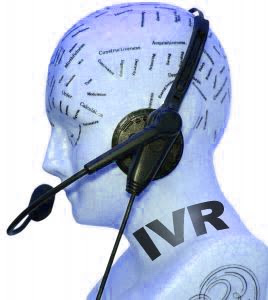
Interactive Voice Response

Interactive Voice Response
As the user’s interaction with the database is predetermined by what the IVR system will allow the user access to, IVR technology does not require human interaction over the telephone. Example, banks and credit card companies use IVR systems because their customers can receive up-to-date account information instantly and easily without necessarily speaking to a person. IVR technology is also used to gather information, such as telephone surveys in which the user is prompted to answer questions by pushing the numbers on a touch-tone telephone.

Generally the system plays pre-recorded voice prompts to which the person presses a number on a telephone keypad to select the option chosen, or engage in simple answers such as “yes”, “no”, or numbers in answer to the voice prompts. The latest systems use natural language speech recognition to interpret the questions that the person wants answered. One of the newest trends, Guided Speech IVR, integrates live human agents into the design and workflow of the application to enable speech recognition with human context.

Other innovations include the ability to speak complex and dynamic information. Examples would be an e-mail, news report or weather information using Text-To-Speech (TTS). TTS is a computer generated synthesized speech and is no longer the robotic voice people associate with computers. Real voices are used to create the speech in tiny fragments that are glued together before the caller hears it.

IVR systems can be used to create and manage many services such as telephone banking, order placement, caller identification and routing, balance inquiry, and airline ticket booking. Voicemail systems are different from IVR systems because they are a one-way communication tool (the caller leaves a message), but IVR systems attempt two-way interaction with the caller. Automatic call distributor (ACD) systems are often the first point of contact when dealing with any larger business, and can be used in place of more expensive IVR systems. IVR systems are mainly used at the front end of call centers to identify what type of service the caller wants and to extract numeric information such as account numbers as well as provide answers to simple questions like account balances or just to allow pre-recorded information to be heard.

IVR systems are often referred to as being unhelpful and difficult to use because of the poor design and lack of appreciation of the callers’ needs. A fully functional IVR system should connect callers to their desired service promptly and with minimal flaws.

IVR call flows are created in a variety of ways. Older systems, which depended upon proprietary programming or scripting languages, and modern systems, which are structured similar to WWW pages, using the VoiceXML or SALT languages. This allows any Web server to act as an application server, enabling the developer to focus on the call flow. Developers need not require specialized programming skills, as any Web developer already have the tools needed to create an IVR call flow.

Voice Over IP Warrior

Voice Over IP Warrior
In a traditional PSTN, the quality of service of the calls and continuous connection are very dependable; so, in order for people to switch to IP telephony, the same quality considerations must be maintained or excelled. With IP telephony consisting of distributed elements, the entire architecture has to be strategically managed to provide good service while at the same time reducing the overload and maintenance costs.

Voice over Internet Protocol, or VoIP, solutions include components such as end-user devices, PBX, gateways and gatekeepers, IP network and several protocols that take care of the issues and operations of a transaction. When a call is initiated, there are distributed arrays of routers, which manage the call functions such as identification of the destination, maintenance of the connection between the IP and PSTN, billing management, and alerts about the incoming transaction.

In this competitive VoIP market, VoIP solutions must be able to meet needs such as high-speed interface, predictable performance, quality of service and security. These factors drive application development and infrastructure deployment. The routers should be able to handle thousands of calls through increased bandwidth, and they should also match the interface speeds in order to forward the IP packets. The quality of service is maintained in the router by addressing concerns such as exact sequencing of the packets so that the call is clear and meaningful. Security features are to be implemented to prevent hackers from accessing the infrastructure. This is managed by enumerating the routers, which function as gateways and controllers as private addresses, so they are not accessed through the public Internet.

A robust infrastructure deployment is complemented by application development that adheres to various protocols that are mostly governed by International Transmission Union (ITU) and Internet Engineering Task Force (IETF). Several protocols are available, and the necessity of the implementation depends upon the product groups. Signaling System Seven (SS7) is a protocol that manages the establishment and termination of calls. H.323 is a product-based communication protocol that signals the call to the IP network and the end user.

RTP protocols
address the concerns of real-time receipt of calls so that the calls arrive in the same sequence. Media Gateway Control protocol coordinates the actions of gateways. Session Initiation Protocol (SIP) handles the setup and tear down of multimedia sessions between speakers.

With a combination of infrastructure and protocol, VoIP solutions enable the customer to establish calls at a fraction of the rate of PSTN lines, while at the same time maintaining quality

VoIP is Gaining Popularity in Asia

VoIP is Gaining Popularity in Asia
Internet telephony is now a billions business in Asia and is expected to grow by at least 20 per cent annually. Enterprises who initially wary of VoIP due to reliability and investment seems to have finally overcome their initial resistance. Major countries in Asia such as China, Japan, India and Singapore have taken significant steps for VoIP implementation for enterprises.

Why VoIP is on the Rise?

Voice over Internet Protocol (VoIP) is a technology that allows you to make telephone calls using a broadband Internet connection. It converts the voice signals into data for transmission over an IP network, and then reconverts the data back to voice signals.

There are several factors tip in the scales in favor of IP telephony. But the primary one is the trend towards a consolidated data and voice infrastructure as organizations look to reduce operational costs.

Also, an increasing need to replace traditional private branch exchange (PBX) systems has pushed businesses to look at alternatives like VoIP. With the current distributed IP phone solution, enterprises do not have to fuss over system breakdowns that once plagued the old PBX.

The implementation of VoIP system allows voice calls to be carried over the company’s existing data network. The IP phone system has helped to reduce voice traffic and ease the maintenance.

The rise of VoIP among enterprises also because of the high growth of broadband connections to the home, improvements in quality of service, and hook-ups that allow VoIP calls over ordinary telephone handsets rather than clunky PC microphone systems.

VoIP services for now typically promise a significant cost savings, virtually wiping out charges for long distance and international calls. In addition, connecting phone calls over the Internet could eventually open the door to advanced communications services that tie voice together with e-mail, instant messaging and video conferencing.

VOIP Diet

VOIP Diet
Everyone’s heard of “fad diets” from the Atkins Diet to the Amputation Diet. The VOIP Diet is a sure-fire diet that lures you away from big, expensive and fattening power lunches. The VOIP Diet enables you to eat smart by working from home. Instead of hurried lunches at the burger place, open the fridge and eat last night’s nutritious and inexpensive leftovers.

How can you lose weight on the VOIP Diet? Just install DSL or cable high-speed internet access and a Multitech VOIP extender in a converted spare room in your home or apartment. Multitech can connect to your office’s phone system. As a part of our sales ACD group, I need to be available for our many sales requests. The first thing I noticed after installing the Multitech VOIP was my sales went through the roof. No more office distractions. I could now just focus on my customers.

The second thing I noticed was my car. I hardly drove and with gas costing roughly $3.00 per gallon, I’m content leaving my car right where it is. Of course, the best perk was seeing my family more. They loved it and I did too. I was home in the mornings and able to eat breakfast with them and I was home when they returned from school. It was a huge positive change with my wife and kids. They are so much happier and so am I. I still go to the office once a week but days of a long and hassled commute are over. And don’t get me started on the 20 lbs I dropped by not eating at Mr. Beef.

Get the technology that enables more home time and encourages better eating. A single port, a Multitech VOIP gateway and extender costs only $995.00. You can install it on virtually any telephone system including Partner, Merlin Legend, Merlin Magix and Definity. VOIP works on ADSL, SDSL and Cable.


View This Site: USA top 10 fitness camps | fitness resort

Applicability of Federal Wiretapping Law to VoIP

Wiretapping Law to VoIP
One issue that the FCC is discussing in their proceedings is that this new technology may provide a way to make the detection of crimes more difficult. The Federal Bureau of Investigation (“FBI”) is concerned that VoIP “offers increasing opportunities for terrorists, spies and criminals to evade lawful electronic surveillance,” since they could make calls over the Internet, which requires different technology than the FBI currently uses for intercepting regular telephone calls.It is also easier to apply strong encryption to VoIP transmissions. Hence, the FBI is pressing the FCC for new Internet eavesdropping rules. If the FBI’s position prevails, it will have access not only to VoIP calls, but anything else that travels over broadband, including e-mail, instant messaging, and Internet browsing. Civil libertarians are justifiably concerned about privacy and other civil liberty implications.

The FBI already has the ability to seek a court order to conduct surveillance of a broadband user under existing federal wiretapping laws. Vonage, for example, has been served with subpoenas for both call records and call data. Vonage can retrieve the data immediately because the company has it on hand. When the company receives a request for live voice interception, it is easily able to copy the data stream and send it to another location because all the VoIP calls go through a central server. It is unclear why the FBI needs additional access beyond what it can obtain under existing laws, but if it is granted, broadband users will need to understand the capability that law enforcement will have to access all of their cable activity


View This Site: USA top 10 fitness camps | fitness resort

Active Directory and Organizational Units

Active Directory and Organizational Units
Active Directory

Active Directory (AD) is a way to logically organizing users, computers, and resources on the UAA network. The UAA AD system (UAACTDIR) is organized into Organization Units (OU) that give members access to shared drives that contain proprietary information. The OU that a user belongs to is determined by the department or office of their employment.

(X:) Shared Drive

These shared drives are mapped to the (X:) drive under the "Network Drives" section of My Computer on your Windows PC. Shared drives contain folder/file permissions for groups and individuals based on their required needs and access to department documents and resources.

(H:) Home Folder

Another drive that will automatically appear under the "Network Drives" section of My Computer is the (H:) drive. The (H:) drive represents a users home folder that serves as a personal storage repository for documents that only the AD user has access.

Juniper Research Forecasts $1.5 Billion Revenue Stream for Mobile AR Apps by 2015

Juniper Research Forecasts $1.5 Billion Revenue Stream for Mobile AR Apps by 2015
As per new research conducted by Juniper Research, entitled “Mobile Augmented Reality: Opportunities, Forecasts & Strategic Analysis 2011-2011,” mobile global revenues driven by increasing number of leading brands, retailers and mobile vendors investing in mobile augmented reality (AR) applications and services, is expected to reach $1.5 billion by 2015.

According to the report, from an eight million figure in 2009, the installed base of AR capable smartphones has reached up to 100 million units in 2010. The growth was fueled by AR apps gaining popularity among smaller development companies and researchers at technological institutes with support from the larger players. Some of the major developments highlighted in the Mobile Augmented Reality report included release of Qualcomm’s AR-software development kit for Android, availability of preloaded AR browsers within Samsung (News - Alert) handsets in selected markets as well as branded mobile advertising campaigns from Carlsberg and Coca Cola with featured AR elements.

At this week’s ITEXPO East 2011, the leading IP communications conference, mobile vendors presented at the 4GWE conference, which discussed the critical issues of how best to enable and exploit the mobile Internet. 4GWE explored the trends driving a shift toward an anywhere, anytime, broadband mobile network. The conference served as a gathering place for Mobile Network Operators, fixed carriers, handset manufacturers, mobile Internet device manufacturers, application providers, and venture capitalists.

Executives from mobile vendors including Skype, Google (News - Alert), Verizon, Motorola, AT&T, and more, expanded upon the operator's role in meeting the ever increasing demand for wireless services; how carriers will prioritize traffic in an age of mobility and never ending applications; the role of the device in delivering 4G applications; how the smartphone will improve productivity in the enterprise and at home; and the role of 4G technologies including WiMAX (News - Alert) 2.0, WiFi, and LTE.

In a release, report author Dr. Windsor Holden said, “One of the key benefits from this heightened activity is the fact that it generates press interest and public awareness: even if consumers don’t necessarily understand how it works, they can see real life examples of AR in action. Likewise, it serves to generate wider interest amongst brands and developers who can see potential applications for AR technology; it educates the market.”

With the last-minute deployments of AR elements to pre-existing apps, the report also discusses the hesitancy among developers and consumers in accepting AR apps as “real,” given that the use of AR was limited and had failed to engage successfully with the end user.

Instructions for Router Installation

Instructions for Router Installation
If you are using a router, please follow these instructions for connecting to the DSL modem.

* Connect the port labeled "WAN" or "Internet" on your router to the DSL modem.
* DO NOT connect a port labeled "LAN" on your router to the DSL modem!
* Follow the manufacturer's directions for configuration. If you check the router's status panel it should be getting an IP address that begins with 10. If it is not, you may have a problem with how you have it connected or configured which will need to be resolved before you can continue. (We do not support the use of routers; please refer to your router user manual.)
* Once you have an IP address that begins with 10, connect a computer to the router. Make sure you are getting an IP address from the router and have good communications with it.
* Register the router:
Do it yourself:
+ Visit the DSL registration page at http://umdsl.itcs.umich.edu/ and authenticate. This will register the router.
+ Wait 30 minutes and release/renew the router's IP address using its control panel, or by power-cycling the router.
+ If you can't reach the registration page, try accessing it from a computer connected directly to the DSL modem to be sure it is working in general. Assuming that it is working, failures to reach the registration page from behind the router may indicate a problem with how the router or connected computer is configured. These problems should be resolved before proceeding.

IP Telephone Service That's Easy, Inexpensive and Reliable!

IP Telephone services
Until now, IP Telephone services were complex and often needed expensive equipment to connect to your existing phone system. Accessing the latest PC phoning features and having a "portable" phone number that follows you wherever you go sometimes required replacement of all your phones with IP phones.

With MeritVoice, your organization has all the benefits of an advanced, low cost IP Telephone service without changing your current phone system. In most cases, MeritVoice even provides the equipment your system may need to connect to an IP phone line usually at no additional cost!

MeritVoice also provides local calling throughout Michigan (with none of the black-out areas other providers have), long distance calling worldwide and full 800 number capability.

* Delivers a complete, reliable and secure, converged communications solution integrating voice and data over your IP network.

* MeritVoice uses Merit's advanced fiber-optic network and leverages the power of our Members' dedicated connections to the network.

* Brings IP cost savings and features to conventional phone systems.

* Consolidates voice, video and data from one source: a single supplier for networking, phone, administrative and billing support.

* Advanced features like emergency and broadcast dialing which allows you to call your whole community in minutes. Voice broadcast reaches vast numbers of people in a short amount of time via either their fixed or mobile phone as well as via SMS alerting and e-mail.

* MeritVoice peers with TelNet's network at multiple points in Michigan, enhancing performance, speed, and reliability.

Together with TelNet WorldWide, Merit brings the most experienced team in IP Voice technology and networking to your organization!

* Merit and TelNet are Michigan-based providers with the largest coverage in the state.

* Cost savings: assuring cost savings with the best-in-class, customized solutions

* Our priority is Michgan's Research, Education, Library and HealthCare organizations!

Duke to convert phone service to voice over IP

Duke to convert phone service to voice over IP
Duke University will convert all phone service on the main Duke campus, including the health system, to Voice over Internet Protocol (VoIP), over a two-year period. The move will vastly simplify the way phone service is provided across campus, and will reduce phone service costs by more than $2 million a year when completed.

VoIP is a technology that converts the voice at one end of a telephone conversation into small packets of data, transmits those packets across existing data networks, and reassembles them into intelligible speech at the other end of the call. Since VoIP eliminates the need for dedicated telephone lines and switching equipment, the system can help to reduce infrastructure and communication costs.

“OIT has been testing and piloting Voice over IP service for some time now, and we put our first 500 production phone sets into service three years ago,” said Duke University Chief Information Officer Tracy Futhey. “Today, 10 percent of our phones are using VoIP, and our technology infrastructure is ready to support VoIP for all users on campus.” Many large corporations have been using VoIP for years and, increasingly, universities are following suit.

The adoption of VoIP, Futhey explained, “will allow us to retire Duke’s legacy phone switches, which are costly to maintain and, in some cases, difficult to upgrade. With everyone using VoIP for phone service, we will be able to reduce phone rates for all departments starting in July of next year and, because we will standardize the models we offer for most applications, we will also be able to save on equipment purchases and establish a common replacement schedule. All of this helps ensure that we are using Duke’s financial resources as efficiently as possible.”

The aggressive conversion schedule—replacing more than 30,000 lines over the course of two years—will allow the enterprise to benefit from the projected annual savings as quickly as possible, and to avoid the cost of upgrading legacy equipment. In addition, this process will give each department the opportunity to review phone needs, with an eye toward reducing the number of lines used and thereby saving even more on phone service.

OIT project staff have already started meeting with key staff in the offices of the provost, the executive vice president and the health system to share the draft project plan. Once a schedule for conversion of each department is set, project timelines, metrics and status reports will be made available via the Web. As the staff in each department gets close to conversion, they will receive detailed information about the process and instructions for use of the new phones.

While VoIP phones use different technology to transmit calls, they work essentially the same way other phones do: you pick up a handset, punch out the number you want on the keypad, and use other buttons for redial, hold, and so on. With VoIP service, however, you’ll be able to do other things, like move your phone (and your dedicated phone number) to another location without paying for a service call, or duplicate the settings from your office phone on the phone in your lab.

Software Phones at Dartmouth

Software Phones at Dartmouth
Students at Dartmouth can now use their computers as phones - and through an independent development, long distance charges are now also a thing of the past. This fall, Dartmouth's incoming freshmen can download free software that allows their Windows computers to function as telephones on both the campus's wireless and wired networks. This offering is one of several new mobile voice options from Dartmouth's Computing Services Department.

"I don't think anyone's done this before on such a large scale," says Bob Johnson, Associate Director for Telecommunications, "so we're eager to see how the community uses these new ways of communicating. We'll be studying it."

The "softphones," which are being phased in throughout the fall term starting with the first year students, allow any Windows computer to place and receive telephone calls. Wireless or wired, all users need is a headset or handset (available from the campus computer store), some free software from the Dartmouth Web site, and an assigned phone number in order to talk on the phone from Dartmouth to anyone, anywhere, anytime. There are a few new handheld wireless phone options as well.

"This software frees you from thinking a phone is a physical device," says Larry Levine, Director of Computing. "Your phone could be your laptop computer, your handheld computer, or any other wireless device."

The rollout of the software is the first of a new generation of communications technologies made possible by an upgrade of the campus data network this past winter and spring. Once separate, the data and telephone networks are now merged in a way that provides new services to the Dartmouth community, including voice-over Internet protocol, or VoIP. With VoIP, phone calls travel along the converged data-telephone network, eliminating long distance fees.

"Softphones are less expensive than cell phones," says Levine. "Because we've also simply stopped charging for long distance calls, no matter what kind of phone you use at Dartmouth there's no charge for long distance, whether you call from a regular phone or a softphone," says Levine.

This campus-wide technological experiment will be closely watched. Computer Science Professor David Kotz and his students, as well as Thayer School of Engineering professors and professionals from Computing Services, will all study the impact on both the wireless and wired networks as more and more converged traffic crosses the wires during the term.

Internet phones have arrived

Internet phones have arrived
The idea of digitizing voices isn't new; just listen to a CD. But digitizing phone calls, organizing them in "packets," and sending them over network lines is now becoming mainstream. Dartmouth is embracing this new technology by converting its traditional phone lines to voice-over Internet protocol, or VOIP.

As part of Dartmouth's planned upgrade, a new and improved network infrastructure, which was gradually installed over the last five months, will be rigorously tested over the next few weeks. The new equipment allows for "convergence," a term that describes the fact that cable TV, voice and data will travel through one line.

"Convergence is saving us space and money," says Brad Noblet, director of technical services for Peter Kiewit Computing Services. "The jack in the wall becomes an all-in-one utility, and we upgrade all three systems with one shot."

From a user's point of view, sending phone calls over the data lines with a new system works exactly the same way as before. The actual VOIP phone set looks a little different, but users will not otherwise notice a difference in basic telephone service, says Noblet. However, the new system brings new conveniences, such as the ability to place calls or retrieve messages from a wireless-enabled laptop via Dartmouth's campuswide wireless network.

"I find it very easy to use, and I use it routinely to call off campus," says John Winn, Professor of Chemistry. "I particularly like that it keeps a list of calls I've placed; I just scroll back to a previously-called number and lift the receiver to place a new call to that number."

Barry Scherr, Provost and the Mandel Family Professor of Russian, agrees. "I like it," he says. "It's a mini computer that doubles as a phone; I can even get news headlines on it."

According to Bob Johnson, Associate Director of Telecommunications, the upgrade provided Dartmouth with a tenfold increase in overall bandwidth capacity and improved network intelligence that brings us "out to the edge of current technology."

"Our old network worked with routers going through one hub," says Johnson. "We replaced the hubs with switches and upgraded all the routers to provide better, uninterrupted service." This means that Dartmouth has upgraded its system to better manage the torrent of information flowing around the campus and to and from the rest of the world.

The new equipment ensures that messages are not slowed down, adds Johnson. Whether it's voice, data or cable TV information that's moving around our campus network, service will be consistent and reliable. Backup generators have been installed as part of the upgrade, ensuring that network service will never be compromised and 911 service will continue to function in an emergency.

While VOIP is tested, though, the old phone service will remain in place.

"We have a three-year safety net," says Noblet. "That's how long our existing telephone contract runs."

Alex Jordan '03, from Chelmsford, Mass., is an engineering major working with the VOIP infrastructure for his senior thesis. He is working with specialized digital radios that use the amateur radio bands to make long distance network connections. He is creating a new network independent of the campus system that will be able to operate over much longer distances.

"Since the radios are portable," he says, "it would be possible to set up these wireless video and voice connections virtually anywhere using just a laptop, a commercial webcam and the digital radios. They would be especially well-suited for emergency or disaster areas where traditional modes of communication have been rendered inoperable. It has been exciting to see how well the VOIP standards work and to get the chance to use them to meet our communication needs over these new networks."

Welcome to VoIP at UofL

VoIP at UofL
Voice over IP (VoIP) is an increasingly popular form of telephone service. VoIP works by taking the voice signals on your telephone, converting the signals to digital information, and sending them over a computer network instead of over traditional telephone lines. Over the past few years VoIP replaced most of the phone systems at larger organizations, such as UofL, and is now offered to homes in some areas over broadband cable and DSL connections.

The university has been using VoIP successfully since 2002. VoIP can be installed anywhere the ethernet network is available. Only one internet outlet is necessary to use a VoIP phone. When installed, the VoIP phone plugs into the Internet outlet and the computer plugs into the back of the phone.

The University of Louisville gratefully acknowledges the assistance of Case Western Reserve University in the development of these web pages for their permission to use VoIP documentation and materials from their web site.

Area codes to change at Kilmer Library, Dec. 3rd; Part of Rutgers VOIP project

Kilmer Library
After December 3rd any calls to phone numbers in the Kilmer Library must be preceded by a new area code - 848. This change is taking place as part of the university's five year project to implement Voice Over Internet Protocol (VOIP) phone lines across the New Brunswick/Piscataway campuses.

For a limited period of time, callers who dial the old area code of 732 will reach a recorded announcement that reminds them of the new area code and asks them to redial.

Rutgers initiated the VOIP project to provide university departments and offices with less expensive and more manageable options for their telecommunication needs. The change to VOIP phone service will be undertaken in stages, over the next four years, based on the infrastructure available on the different campuses and the readiness of specific buildings and departments. There are currently no plans to implement VOIP on the Camden and Newark campuses.

The Libraries are excited by the move to VOIP because it will allow us to save money on phone costs and will allow new options in our phone service. As an example of one possible benefit - since Rutgers will own the entire 848 area code, faculty or staff members who move to an office in another building can take their phone number with them. This change alone will save Libraries personnel, and their professional and personal contacts, countless hours in now-unnecessary phone book updates over the years to come.

In the months ahead the Libraries will post news updates as additional library buildings implement VOIP and change their area code to 848. The next library scheduled to implement VOIP is the Douglass Library, in March or April of 2011.

New Features offered by Voip

New Features offered by Voip
The new system will provide SanJac a variety of new features.

One-X Portal

The Avaya one-X Portal will give SanJac employees easy access to communications capabilities anytime, anywhere. Avaya one-X™ Portal is a web-based software solution that provides workers with access to directory information, voicemail, and audio conferencing.

Enhanced 911

Amcom’s enhanced 911 . The solutions pinpoint a 911 caller’s exact location and pass it along to the Public Safety Answering Point (PSAP). This kind of reliable, automatic transfer of information will help you provide vital, lifesaving information and notify the appropriate onsite personnel that an emergency call is in progress.

VoIP @ Qatar University New Telephone System

VoIP @ Qatar University New Telephone System
Information Technology Services implemented this spring semester of a new VoIP (Voice over Internet Protocol) telephone system, a technology that enabled the University to make telephone calls using the Campus network instead of traditional phone lines. All Colleges/departments has been migrated to the new VoIP system gradually.

Old System Disconnection

Since all the offices and staff have been migrated to the new system, we are starting discontinuation of the old system. All the OLD PHONES operational at ITS Department will be discontinued starting Jun 01, 2010. This process will be gradually executed throughout Qatar University and by Jun 30, 2010, QU should have only one system to operate and use.

New QU Numbers

New numbers have been published on QU website and respective departmental websites. Also, online directory at QU website can be used to search for new numbers.

Qatar University Main Number = 403 3333
New ITS Helpdesk = 403 3456.8

VoIP Fulfillment Launched by VoIP Supply

voip information
VoIP Fulfillment by VoIP Supply is a suite of services specifically designed for VoIP service providers that increase operational efficiency, decreases costs and bolster customer experience. I spoke with VoIP Supply's Garrett Smith - Chief Marketing Officer, Mike Russo - Executive Vice President, and Donald Stefanie - VoIP Service Provider Program Manager to learn more.

First off Garrett mentioned that VoIP Supply has over 700 service provider customer – an impressive number – though not all of them are using their new VoIP Fulfillment services. They actually targeted service providers and resellers back in 2004 when their business first started. However, although VoIP Supply started with the service provider and reseller space, they refocused around 2006/2007 on end users since the margins on hardware were getting squeezed. Now they're targeting SMBs directly at 150 seats and under. They also launched their buyback program during the recession period, which really took off and enabled IT Directors to scrape some cash together from some old telecom equipment. In their first year they purchased about $1 million in used equipment. VoIP supply also has a Refresh (refurbished/reconditional) 10-step program that takes customer's used products, cleans it, fixes it up, replaces broken buttons, and then sells it. Last year they launched their "Deploy" service which is their nationwide installation service.

Garret Smith explained, "You can come to VoIP Supply as an end user customer and you can get your phone system, your hosted system, your networking, your cables, your surveillance system even - completely configured, shipped plug n' play and then have our outsourced installation staff go into your office and do the whole soup-to-nuts installation for you, the testing, the final settings & configurations, and essentially leave you with a brand new working system and you don't have to lift a finger." Garrett added that this service is gaining a lot of traction amongst their service provider customers since they're looking to make it easier for their customers to get started.

Garrett, "Where we differentiate is with the ancillary things, like device consultation and selection. Due to the number of service providers, the number of end user customers, the number of resellers that we touch, the variety and the longevity, we're in a position where service providers can come to us and work with us to find the right fit for their service."

Garrett explained they can take the 1st tier customer support and act as a service providers technical support to answer phones or email as though they were the service provider. They can also do co-branding, add any sort of sticker or collateral and custom brand the packing tape, etc. Garrett explained, "Essentially, we can take the entire back-end infrastructure from a pick, pack, and ship, from a device configuration, a customer service & returns perpective and white label that and act as though we are that service provider."

VoIP Supply sells IP phones, IP cameras, extended warranties, Asterisk hardware, networking equipment, DECT SIP phones, and more. One other interesting offering is that VoIP Supply has a leads generation program that providers 30 leads per day to service providers